
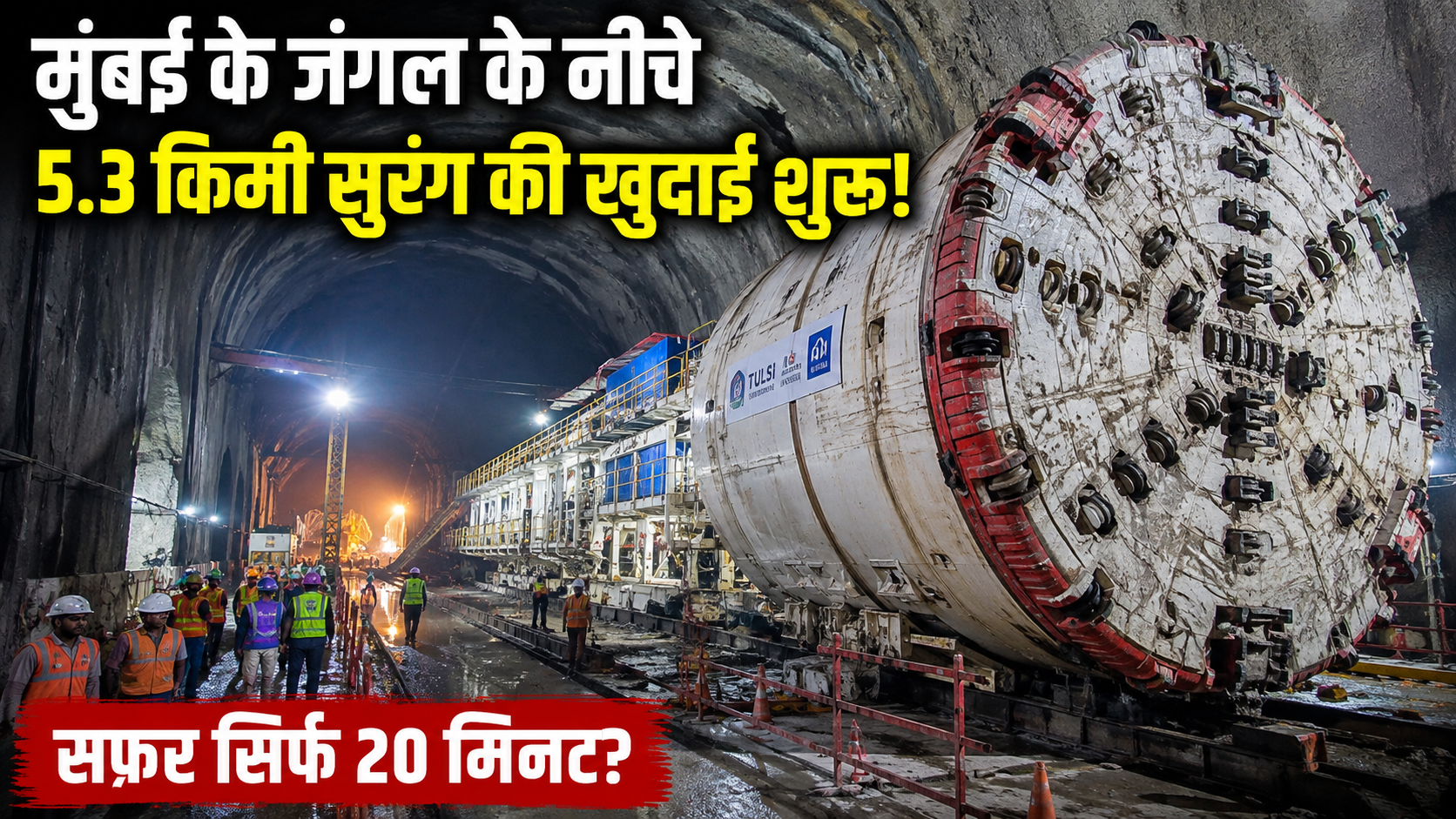
Mumbai GMLR tunnel: SGNP के नीचे TBM Tulsi ने 5.3 किमी tunnel की खुदाई शुरू की। जानिए Goregaon-Mulund route, 20 मिनट सफर, safety और 2029 deadline की जानकारी।
मुंबई: Goregaon और Mulund के बीच सफर करने वालों के लिए बड़ी खबर है। Goregaon-Mulund Link Road (GMLR) project के तहत Sanjay Gandhi National Park (SGNP) के नीचे twin tunnel की actual खुदाई शुरू हो गई है। BMC ने पहली Tunnel Boring Machine यानी TBM ‘Tulsi’ को excavation के लिए commission कर दिया है। यह tunnel Goregaon East की Dadasaheb Phalke Chitranagari यानी Film City को Mulund West के Amar Nagar से जोड़ेगी।
यह सिर्फ एक और road project का construction update नहीं है। GMLR पूरा होने के बाद Mumbai के western और eastern suburbs के बीच direct east-west connectivity तैयार होगी। अभी Goregaon से Mulund जाने में traffic और route के हिसाब से काफी समय लगता है, जबकि project के पूरा होने के बाद travel time करीब 90 मिनट से घटकर 20 मिनट तक आने की उम्मीद जताई गई है। हालांकि यह estimated corridor travel time है, यानी हर हालत में door-to-door 20 मिनट की guarantee नहीं है।
SGNP के नीचे आखिर बन क्या रहा है?
GMLR की कुल length करीब 12.2 किलोमीटर है और project को चार phases में execute किया जा रहा है। SGNP के नीचे बनने वाला tunnel हिस्सा Phase 3(B) का सबसे अहम component है। यहां दो तीन-लेन वाली tunnels बनाई जा रही हैं, जो Film City side से शुरू होकर Mulund West के Amar Nagar तक जाएंगी।
BMC की latest जानकारी के मुताबिक tunnel package की total length करीब 6.6 किलोमीटर है। इसमें twin tunnels के साथ 17 cross passages, 720 मीटर के twin-box tunnel और Goregaon तथा Mulund की तरफ करीब 600 मीटर approach roads भी शामिल हैं। यानी सिर्फ underground boring पूरा होना ही पूरा काम नहीं है; इसके बाद approach roads, internal systems और बाकी infrastructure को भी ready करना होगा।
TBM Tulsi इतनी खास क्यों है?
जिस machine ने अब खुदाई शुरू की है उसका नाम Tulsi रखा गया है। यह अत्याधुनिक Earth Pressure Balance (EPB) TBM technology पर काम करेगी। इसका इस्तेमाल खास तौर पर इस तरह किया जा रहा है कि SGNP के sensitive forest area में surface-level construction का impact कम से कम रहे।
पहली TBM की assembly पूरी हो चुकी थी और उसका Site Acceptance Test भी successfully complete किया गया। अब यही machine underground excavation का actual काम शुरू कर चुकी है। दूसरी TBM की assembly अभी चल रही है और BMC के मुताबिक उससे October 2026 में excavation शुरू करने का target है।
जंगल के नीचे tunnel बनाने की जरूरत क्यों पड़ी?
GMLR का सबसे sensitive हिस्सा SGNP के नीचे से गुजरता है। जमीन के ऊपर बड़ी road बनाने से forest और biodiversity पर ज्यादा disturbance हो सकता था। इसलिए tunnel boring technology के जरिए road को underground ले जाने का रास्ता चुना गया है। पुराने project documents में भी SGNP के अंदर किसी shaft की जरूरत न पड़े, इसके लिए TBM-based tunnelling का प्रस्ताव रखा गया था।
SGNP में Tulsi और Vihar lakes भी हैं, जो Mumbai की water supply का हिस्सा हैं। इसलिए इस project में tunnel construction के दौरान environment और water-related concerns को लेकर safeguards खास महत्व रखते हैं।
यही वजह है कि इस project की सबसे बड़ी चुनौती सिर्फ चट्टान काटकर tunnel बनाना नहीं, बल्कि sensitive forest और आसपास के ecological system को ध्यान में रखते हुए construction पूरा करना भी है।
Tunnel के अंदर safety का क्या इंतजाम होगा?
इतनी लंबी underground road tunnel में सिर्फ road बना देना काफी नहीं है। किसी accident, fire या emergency की situation में लोगों को safe तरीके से बाहर निकालना भी जरूरी है।
GMLR tunnel में mechanical ventilation, mist-based firefighting system, CCTV surveillance, SCADA control system, LED lighting और modern signage लगाए जाएंगे। दोनों tunnels के बीच 17 cross passages भी होंगे। इनका मकसद emergency situation में एक tunnel से दूसरी tunnel तक access और evacuation की सुविधा देना है।
Tunnel में utility ducts भी रखे जाएंगे और हर tunnel में 1,800 mm diameter की water pipeline के लिए provision किया गया है। यानी underground corridor का इस्तेमाल सिर्फ traffic movement तक सीमित नहीं रहेगा, बल्कि city utilities के लिए भी space रखा गया है।
Goregaon से Mulund का सफर कितना बदल सकता है?
GMLR का सबसे बड़ा फायदा उन लोगों को मिलने की उम्मीद है जिन्हें रोज western suburbs से eastern suburbs की तरफ जाना पड़ता है।
अभी Goregaon, Jogeshwari, Powai, Mulund और आसपास के routes पर traffic के कारण east-west movement काफी समय ले सकता है। GMLR के जरिए एक direct high-capacity corridor मिलने से existing roads पर traffic pressure कम करने का target है।
Project operational होने के बाद Goregaon-Mulund journey करीब 20 मिनट तक आने की उम्मीद है। इससे travel time के साथ fuel consumption में भी कमी आ सकती है। लेकिन actual journey time इस बात पर भी depend करेगा कि tunnel के entry-exit points, approach roads और आगे के connecting roads पर उस समय कितना traffic है।
Mumbai के लिए इसका फायदा सिर्फ Goregaon और Mulund तक नहीं
GMLR का असर सिर्फ इन दो इलाकों तक सीमित नहीं रहने वाला। यह western suburbs को eastern side के Mulund, Thane और आगे Navi Mumbai की तरफ जाने वाले road network से बेहतर तरीके से connect करने में मदद कर सकता है।
इससे उन commuters को भी फायदा मिलने की उम्मीद है जिन्हें रोज east-west direction में travel करना पड़ता है। Emergency services, logistics और commercial movement के लिए भी faster connectivity महत्वपूर्ण हो सकती है।
Project से प्रभावित लोगों का क्या होगा?
GMLR की construction के कारण प्रभावित होने वाले करीब 906 project-affected persons के rehabilitation का काम भी project का हिस्सा है। BMC के मुताबिक Kanjurmarg में छह ground-plus-23-storey buildings में इनका rehabilitation किया जा रहा है।
इसका मतलब GMLR की कहानी सिर्फ road और tunnel की नहीं है। Project के साथ उन लोगों का rehabilitation भी जुड़ा है जिनकी property या रहने की जगह infrastructure work से प्रभावित हुई है।
दूसरा TBM कब शुरू होगा और पूरा project कब मिलेगा?
पहली TBM Tulsi ने excavation शुरू कर दिया है। दूसरी TBM की assembly चल रही है और BMC ने October 2026 में उसकी excavation शुरू करने का target रखा है।
पूरे GMLR project को February 2029 तक complete करने का target रखा गया है। BMC के मुताबिक project में अब तक करीब 21% physical progress हो चुकी है।
यानी अभी Mumbai commuters को 20 मिनट के सफर का फायदा तुरंत नहीं मिलने वाला। पहले tunnels की excavation और lining, cross passages, approach roads, ventilation, firefighting, CCTV, lighting और बाकी systems का काम पूरा होगा। उसके बाद testing और commissioning के बाद यह corridor traffic के लिए open किया जाएगा।
GMLR की असली परीक्षा अब शुरू हुई है
Goregaon-Mulund Link Road लंबे समय से Mumbai के बड़े connectivity projects में शामिल है, लेकिन अब इसका सबसे challenging underground phase जमीन पर दिखाई देने लगा है।
TBM Tulsi के शुरू होने का मतलब है कि project अब planning और preparation से निकलकर actual tunnelling phase में पहुंच गया है। आगे दूसरी TBM का काम शुरू होना, दोनों tunnels की excavation पूरी होना और बाकी road infrastructure का समय पर तैयार होना सबसे अहम रहेगा।
अगर BMC का February 2029 वाला target पूरा होता है, तो Mumbai को western और eastern suburbs के बीच एक नया direct high-capacity route मिलेगा। और अगर travel-time estimate के मुताबिक सफर करीब 20 मिनट तक आता है, तो Goregaon-Mulund के बीच रोज travel करने वाले हजारों लोगों के लिए यह सिर्फ एक नई road नहीं, बल्कि daily commute में बड़ा बदलाव हो सकता है।
