Category: ⁠Startup News

Read the latest startup news, business updates and insights from India’s growing startup ecosystem and global markets. Stay informed with coverage on new startups, founders, funding rounds, investments, unicorn companies, technology innovations and entrepreneurship trends on Indian FastTrack.

  • Startup Registration in Mumbai: Complete Step-by-Step Guide (2026)

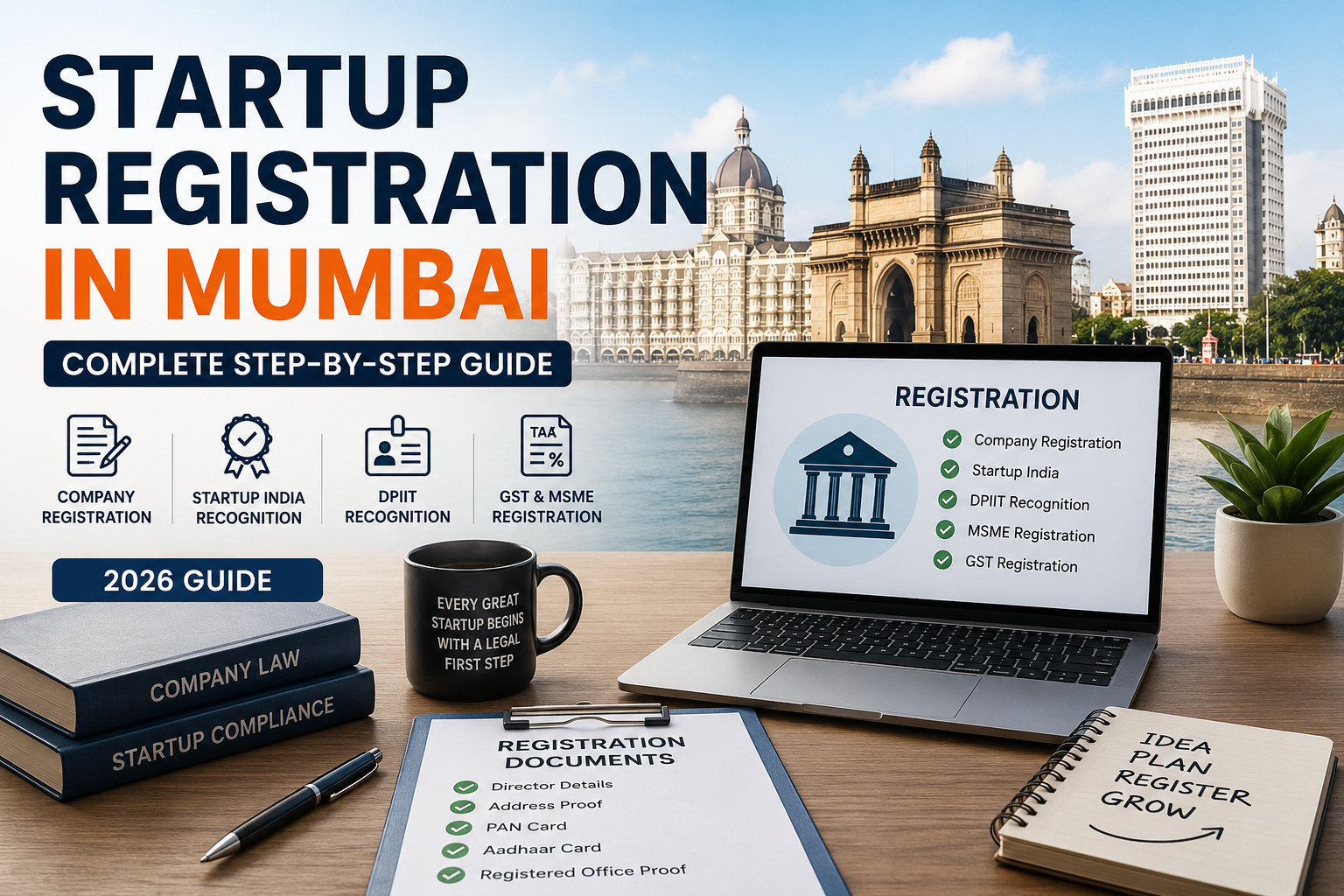
    Startup Registration in Mumbai: Complete Step-by-Step Guide (2026)

    Learn how to register a startup in Mumbai with this complete 2026 guide covering company registration, Startup India, DPIIT, MSME, GST, costs, and required documents.

    Every successful startup begins with a great idea, but turning that idea into a legally recognized business is the first real milestone. Whether you’re building a technology platform, launching a D2C brand, opening a consultancy, or developing an innovative product, startup registration in Mumbai is an essential step that lays the foundation for long-term growth.

    Many aspiring entrepreneurs delay registration because they believe the process is complicated, expensive, or filled with legal hurdles. In reality, India has made significant progress in simplifying business registration through digital platforms and startup-friendly initiatives. Today, most registration-related processes can be completed online with proper documentation and professional guidance.

    Mumbai, being India’s financial capital, attracts thousands of entrepreneurs every year. The city offers access to investors, customers, mentors, and business opportunities, making it one of the best places to launch a startup. However, operating without the correct legal structure can create challenges when opening a bank account, raising funds, signing contracts, hiring employees, or applying for government benefits.

    That’s why choosing the right business structure and completing the required registrations should be one of your first priorities.

    In this guide, you’ll learn everything you need to know about registering a startup in Mumbai—from selecting the right legal entity to obtaining Startup India recognition, registering under MSME, understanding GST requirements, estimating costs, and avoiding common mistakes.

    Whether you’re a first-time founder, freelancer planning to scale, or an experienced entrepreneur launching a new venture, this guide will help you understand the registration process in a simple and practical way.

    read also- Best SIP Plans for Beginners in India 2026 – Smart SIP Strategy for Long-Term Wealth Creation

    Why Startup Registration Is Important

    Many entrepreneurs begin by testing their business idea informally. While this approach works during the initial validation stage, operating without proper registration becomes risky as the business grows.

    Registering your startup offers several important advantages.

    Builds Business Credibility

    Customers, investors, banks, and corporate clients are more likely to trust a legally registered business than an unregistered one. A registered entity demonstrates professionalism and commitment.

    Makes Fundraising Easier

    Most angel investors, venture capital firms, and financial institutions prefer investing in legally registered companies. If you plan to raise funds in the future, registration is almost always necessary.

    Opens a Current Bank Account

    Business transactions should ideally be separated from personal finances. Registration enables you to open a business current account, improving financial management and accounting.

    Protects Founders

    Depending on the legal structure you choose, registration can provide limited liability protection. This helps safeguard personal assets from certain business-related risks.

    Improves Business Opportunities

    Many government tenders, corporate contracts, startup programs, and incubators require businesses to be legally registered before applying.

    read also- How to Improve CIBIL Score Fast: 10 Smart Fixes That Work

    Choosing the Right Business Structure

    One of the most important decisions you’ll make before registration is selecting the appropriate legal structure. The right choice depends on factors such as the number of founders, investment plans, liability, taxation, and future growth.

    Below are the most common business structures for startups in Mumbai.

    Comparison Table: Sole Proprietorship vs LLP vs Private Limited Company

    FeatureSole ProprietorshipLimited Liability Partnership (LLP)Private Limited Company
    Best ForFreelancers, Consultants, Small BusinessesProfessional Firms, Agencies, Small StartupsScalable Startups, Tech Companies, Fundraising
    Minimum Owners12 Partners2 Directors & 2 Shareholders
    Separate Legal Entity❌ No✅ Yes✅ Yes
    Limited Liability❌ No✅ Yes✅ Yes
    Ease of Registration⭐⭐⭐⭐⭐ Very Easy⭐⭐⭐⭐ Easy⭐⭐⭐ Moderate
    Compliance RequirementsLowModerateHigh
    Fundraising CapabilityVery LimitedLimitedExcellent
    Suitable for Investors❌ No⚠️ Limited✅ Yes
    Business CredibilityModerateHighVery High
    TaxationPersonal Income TaxLLP Tax RatesCorporate Tax Rates
    Business ContinuityDepends on OwnerBetterExcellent
    Government Startup BenefitsLimitedAvailable (if eligible)Available (if eligible)
    Ideal for Long-Term Growth❌ Limited✅ Good✅ Excellent

    Quick Recommendation

    If You Are…Recommended Structure
    Freelancer or Individual ProfessionalSole Proprietorship
    Two or More Professionals Starting a BusinessLLP
    Planning to Build a Scalable StartupPrivate Limited Company
    Looking for Angel or VC FundingPrivate Limited Company
    Launching a SaaS, AI, FinTech, or Tech StartupPrivate Limited Company
    Running a Consulting or Service-Based BusinessLLP

    💡 Pro Tip

    Don’t choose a business structure only because it’s cheaper to register. Choose one that aligns with your long-term goals, funding plans, ownership structure, and expected growth. Changing your business structure later can involve additional costs, paperwork, and compliance.

    read also- Best Work From Home Jobs in India With High Income

    1. Sole Proprietorship

    A sole proprietorship is the simplest business structure and is generally suitable for freelancers, consultants, small retailers, and individual service providers.

    Advantages

    • Easy to start.
    • Low compliance requirements.
    • Minimal registration cost.
    • Complete control over business decisions.

    Limitations

    • No separate legal identity.
    • Unlimited personal liability.
    • Difficult to attract investors.
    • Limited scalability.

    This structure is suitable for individuals testing a business idea before expanding.

    2. Partnership Firm

    If two or more people plan to run a business together, a traditional partnership can be an option.

    Advantages

    • Easy to establish.
    • Shared investment.
    • Shared responsibilities.
    • Lower compliance than companies.

    Limitations

    • Partners generally have unlimited liability.
    • Ownership disputes may arise without a well-drafted partnership deed.

    3. Limited Liability Partnership (LLP)

    An LLP combines the flexibility of a partnership with limited liability protection.

    It has become a popular choice among consultants, agencies, professional service firms, and small startups.

    Advantages

    • Limited liability.
    • Separate legal identity.
    • Better business credibility.
    • Moderate compliance.

    Best For

    • Consulting firms.
    • Marketing agencies.
    • IT service providers.
    • Professional firms.
    • Small technology startups.

    4. Private Limited Company

    For startups planning to scale, raise investments, or build a large business, a Private Limited Company is generally the preferred structure.

    This is also the structure most commonly preferred by angel investors and venture capital firms.

    Advantages

    • Separate legal identity.
    • Limited liability.
    • Easier fundraising.
    • Better brand credibility.
    • Suitable for long-term growth.

    Best For

    • Technology startups.
    • SaaS companies.
    • FinTech startups.
    • AI startups.
    • Healthcare startups.
    • Consumer brands.
    • Businesses planning to raise external funding.

    Although compliance requirements are higher than those of a sole proprietorship or LLP, the long-term advantages often outweigh the additional responsibilities.

    Startup-Registration-mumbai

    Which Business Structure Should You Choose?

    There is no one-size-fits-all answer.

    If you’re starting alone with a small budget and want to validate an idea, a Sole Proprietorship may be sufficient.

    If you’re building a professional services business with one or more partners, an LLP can be a practical choice.

    If your goal is to create a scalable startup, attract investors, and build a recognizable brand, a Private Limited Company is generally the most suitable option.

    Choosing the right structure at the beginning can save significant time, money, and administrative effort as your business grows.

    Excellent. Ab isi article ka Part 2 continue karte hain. Yeh same article ka continuation hai.

    read also- How to Start a Blog in India and Earn Money Fast

    Documents Required for Startup Registration in Mumbai

    Before beginning the registration process, make sure all required documents are ready. Having the correct paperwork in advance helps avoid unnecessary delays and makes the application process much smoother.

    Although the exact requirements may vary depending on the business structure, most startups will need the following documents.

    Identity Proof

    Every founder or director must provide a valid government-issued identity proof such as:

    • Aadhaar Card
    • PAN Card
    • Passport (if applicable)
    • Voter ID (in some cases)

    Among these, PAN and Aadhaar are the most commonly required documents for Indian founders.

    Address Proof

    Each director or partner should also submit a recent address proof, such as:

    • Aadhaar Card
    • Passport
    • Driving Licence
    • Utility Bill
    • Bank Statement

    The address proof should generally be recent and clearly display the applicant’s name and address.

    Registered Office Address Proof

    Every company must have a registered office address.

    The following documents are generally accepted:

    • Electricity Bill
    • Property Tax Receipt
    • Water Bill
    • Rent Agreement (if the property is rented)
    • No Objection Certificate (NOC) from the property owner, where applicable

    A startup does not necessarily need a commercial office. In many cases, a residential address can be used as the registered office, subject to compliance with applicable rules.

    Passport-size Photographs

    Recent passport-size photographs of all directors or partners may be required for documentation and verification purposes.

    Email Address and Mobile Number

    Every director should have an active:

    • Email ID
    • Mobile Number

    Most official communications and OTP-based verifications are completed through these.

    Step-by-Step Startup Registration Process in Mumbai

    Many first-time entrepreneurs assume company registration involves lengthy paperwork and multiple office visits. Fortunately, much of the process can now be completed online.

    Here’s how it typically works.

    Step 1: Decide Your Business Structure

    The first step is selecting the appropriate legal entity.

    For example:

    • Sole Proprietorship
    • Partnership Firm
    • LLP
    • Private Limited Company

    Most startups planning future investment choose a Private Limited Company, while freelancers and consultants often prefer a Sole Proprietorship or LLP.

    Choosing the right structure from the beginning helps avoid unnecessary restructuring later.

    read also- Affiliate Marketing India Guide That Can Unlock Huge Earnings

    Step 2: Obtain a Digital Signature Certificate (DSC)

    Since company registration is completed electronically, directors are required to digitally sign various documents.

    A Digital Signature Certificate (DSC) functions like an electronic signature and is used while submitting registration forms.

    Without a DSC, online incorporation documents cannot be signed.

    Step 3: Apply for Director Identification Number (DIN)

    Anyone who wishes to become a director of a company must obtain a Director Identification Number (DIN).

    The DIN acts as a unique identification number for company directors and remains valid throughout their lifetime.

    Step 4: Reserve the Company Name

    Choosing a company name is more important than many founders realize.

    Your company name should:

    • Be unique.
    • Not resemble an existing registered company.
    • Avoid trademark conflicts.
    • Reflect your business identity.

    It’s a good idea to prepare multiple name options because your first choice may not always be approved.

    Step 5: File Incorporation Documents

    Once the name is approved, the incorporation documents are submitted to the concerned authorities.

    These documents generally include:

    • Director details
    • Registered office information
    • Company objectives
    • Shareholding pattern
    • Required declarations

    Accuracy at this stage is extremely important because mistakes can delay the registration process.

    Step 6: Receive the Certificate of Incorporation

    After successful verification, the company receives its Certificate of Incorporation.

    This document officially confirms that your company has been legally incorporated.

    At this point, your startup becomes a recognized legal entity.

    Step 7: PAN and TAN Allotment

    During incorporation, the company is generally allotted:

    • Permanent Account Number (PAN)
    • Tax Deduction and Collection Account Number (TAN)

    These are essential for taxation, banking, and other statutory compliances.

    Step 8: Open a Business Current Account

    Once incorporation is complete, the next step is opening a business current account.

    Avoid using your personal savings account for business transactions.

    A dedicated business account makes accounting, tax filing, and financial management much easier.

    Startup India Registration

    Registering a company and obtaining Startup India recognition are two different processes.

    Many entrepreneurs mistakenly believe that incorporating a company automatically makes it a Startup India-recognized startup. This is not correct.

    Startup India recognition is a separate process designed to support eligible innovative businesses.

    Recognized startups may become eligible for various benefits, subject to meeting the applicable criteria.

    Some potential advantages include:

    • Easier participation in government programs.
    • Access to startup networking opportunities.
    • Eligibility for certain support schemes.
    • Recognition within the startup ecosystem.

    However, not every newly registered company automatically qualifies. Applicants must satisfy the prescribed eligibility conditions.

    DPIIT Recognition

    If your startup meets the required conditions, you can also apply for DPIIT (Department for Promotion of Industry and Internal Trade) Recognition.

    This recognition plays an important role in the Indian startup ecosystem and may provide access to benefits introduced under the Startup India initiative.

    To improve the chances of approval, ensure that your business:

    • Is genuinely innovative.
    • Has a scalable business model.
    • Is working towards creating employment or wealth generation.
    • Meets the latest eligibility requirements prescribed by the government.

    DPIIT recognition is particularly valuable for startups seeking credibility, participation in government initiatives, and access to certain startup-specific benefits.

    Excellent. Ab is article ka Final Part complete karte hain. Iske baad article 100% publish-ready hoga.

    MSME Registration for Startups

    Once your startup is legally registered, the next step is to consider MSME (Micro, Small and Medium Enterprises) registration, now known as Udyam Registration.

    Although it is not mandatory for every business, many startups choose to register because it can provide additional recognition and easier access to certain government schemes and financial support.

    Depending on eligibility and applicable government policies, registered MSMEs may receive benefits such as:

    • Easier access to business loans
    • Better opportunities in government procurement
    • Protection against delayed payments
    • Various support schemes for small businesses

    If your startup falls under the MSME category, completing Udyam Registration is generally a good business decision.

    Is GST Registration Mandatory?

    One of the most common questions asked by new entrepreneurs is whether GST registration is compulsory.

    The answer depends on the nature of your business.

    GST registration may become necessary if your startup:

    • Crosses the prescribed turnover limit under GST law.
    • Sells goods or services in situations where GST registration is mandatory under applicable rules.
    • Operates through certain online marketplaces.
    • Engages in interstate taxable supplies in circumstances covered by GST regulations.

    Because GST requirements can vary depending on your business model, it’s always advisable to consult a qualified tax professional before making a decision.

    How Much Does Startup Registration Cost in Mumbai?

    The cost of registering a startup depends on several factors, including:

    • Business structure
    • Government fees
    • Professional service charges
    • Number of directors or partners
    • Authorized capital
    • Digital Signature Certificates (DSCs)
    • Stamp duty and state-specific charges

    As a result, there is no single fixed registration cost that applies to every startup.

    Instead of focusing only on the lowest price, founders should choose experienced professionals who ensure accurate documentation and legal compliance.

    Errors during registration often cost far more to correct later than doing it properly the first time.

    How Long Does Startup Registration Take?

    The timeline varies depending on:

    • Business structure
    • Accuracy of submitted documents
    • Name approval process
    • Government processing time
    • Additional clarifications, if required

    If all documents are prepared correctly and there are no objections, incorporation is generally completed much faster than it was a few years ago because most procedures are now handled online.

    Common Mistakes First-Time Founders Should Avoid

    Many entrepreneurs become so excited about launching their startup that they overlook basic legal and financial planning.

    Avoiding these common mistakes can save both time and money.

    Choosing the Wrong Business Structure

    Selecting a Sole Proprietorship when you plan to raise investor funding later may require restructuring your business.

    Always choose a structure that aligns with your long-term goals.

    Selecting a Name Without Checking Availability

    Many founders finalize branding before confirming whether the company name or trademark is available.

    Always verify name availability before investing in logos, websites, and marketing materials.

    Mixing Personal and Business Finances

    Using personal bank accounts for business transactions creates accounting and taxation complications.

    Maintain separate financial records from the beginning.

    Ignoring Compliance Requirements

    Registering the company is only the first step.

    Businesses must also comply with:

    • Annual filings
    • Income tax requirements
    • GST (where applicable)
    • Accounting standards
    • Other legal obligations

    Ignoring compliance may lead to penalties and unnecessary legal complications.

    Delaying Trademark Registration

    Your company name and brand identity are valuable business assets.

    If you plan to build a long-term brand, consider protecting your trademark at an early stage.

    Should You Register the Startup Yourself or Hire a Professional?

    Many online platforms make company registration appear simple.

    While straightforward cases may be manageable, startups planning rapid growth, investor funding, or multiple founders often benefit from professional guidance.

    A qualified Chartered Accountant (CA) or Company Secretary (CS) can help ensure that:

    • The correct business structure is selected.
    • Documentation is accurate.
    • Compliance requirements are understood.
    • Future legal issues are minimized.

    Professional advice at the beginning often saves significant time and cost later.

    Final Thoughts

    Registering a startup is much more than completing legal paperwork—it’s the first formal step toward building a sustainable business.

    For entrepreneurs in Mumbai, choosing the right business structure, maintaining proper compliance, and understanding government registration requirements can create a strong foundation for future growth.

    Whether you’re launching a technology startup, an online business, a consulting firm, or a product-based company, proper registration builds credibility with customers, investors, banks, and business partners.

    Instead of rushing through the process, take time to understand your business goals, choose the appropriate legal entity, and complete each step carefully.

    A well-registered startup is better positioned to attract investment, scale operations, and compete confidently in one of India’s most dynamic business ecosystems.

    Frequently Asked Questions (FAQs)

    1. Can I register a startup online in Mumbai?

    Yes. Most incorporation and registration procedures can now be completed online through the relevant government portals with the required documents.

    2. Which business structure is best for startups?

    For startups planning to raise investment and scale operations, a Private Limited Company is generally the preferred option. However, the right structure depends on your business model and goals.

    3. Is Startup India registration compulsory?

    No. Startup India recognition is separate from company incorporation and is not mandatory for every business.

    4. Do I need GST registration immediately?

    Not always. GST registration depends on factors such as turnover, business activities, and legal requirements under GST law.

    5. Can a home address be used as the registered office?

    Yes. In many cases, a residential address can be used as the registered office, subject to applicable documentation and legal requirements.

    6. How many directors are required for a Private Limited Company?

    A Private Limited Company generally requires a minimum of two directors under Indian company law.

    7. Is MSME registration mandatory?

    No. Udyam (MSME) registration is generally optional, but many eligible businesses choose it to access available government support and recognition.

    8. How long does company registration usually take?

    The timeline depends on document accuracy, approvals, and government processing. Complete and error-free applications are usually processed faster.

    Conclusion

    Mumbai continues to be one of India’s most attractive destinations for entrepreneurs. However, a great business idea alone isn’t enough. Registering your startup correctly gives it the legal identity, credibility, and structure needed to grow confidently.

    By understanding the registration process, choosing the right legal entity, maintaining compliance, and planning for future expansion, founders can avoid unnecessary complications and focus on building a successful business.

    Think of registration not as paperwork—but as the first investment in your startup’s future.

  • Why Mumbai Is the Best City for Startups in India (2026)

    Why Mumbai Is the Best City for Startups in India (2026)

    Discover why Mumbai is India’s leading startup destination. Learn about its startup ecosystem, funding opportunities, key industries, and business advantages.

    Why Mumbai Is the Best City for Startups in India

    Every successful startup begins with an idea, but the city where that idea is built often plays an equally important role. A strong business ecosystem can connect founders with investors, skilled professionals, mentors, customers, and growth opportunities that are difficult to find elsewhere. This is one of the biggest reasons why entrepreneurs from across India choose Mumbai to launch their ventures.

    Today, a startup in Mumbai is no longer limited to technology companies or mobile applications. The city has become a thriving hub for fintech, e-commerce, artificial intelligence, healthtech, media, logistics, SaaS, consumer brands, clean energy, and many other industries. Whether you are a first-time entrepreneur or an experienced business owner planning your next venture, Mumbai offers an ecosystem that supports innovation at every stage.

    read also- Free Skill India Courses That Can Boost Your Career Fast

    Unlike many cities that specialize in only one sector, Mumbai combines finance, commerce, entertainment, manufacturing, logistics, and technology within a single metropolitan region. This unique combination creates countless opportunities for entrepreneurs to build products, test new ideas, attract investors, and scale businesses much faster than in many other parts of the country.

    The city’s entrepreneurial culture has also evolved significantly over the last decade. Shared workspaces have replaced traditional office setups for many young businesses. Startup events attract thousands of founders every year. Investors actively look for promising companies, while universities and incubators encourage innovation among students and young professionals. These developments have transformed Mumbai into one of India’s most influential startup ecosystems.

    However, launching a successful startup is not only about choosing the right city. Founders must also understand the local market, industry trends, customer behavior, funding options, government initiatives, and business regulations. Entrepreneurs who take time to study these factors are generally better prepared to build sustainable businesses.

    This article explores why Mumbai continues to attract ambitious entrepreneurs from across India and around the world. You’ll discover what makes the city unique, which industries are growing the fastest, what advantages founders can expect, and why Mumbai remains one of the best places to turn a business idea into a successful company.

    Mumbai: More Than India’s Financial Capital

    For decades, Mumbai has been recognized as the financial heartbeat of India. It is home to the country’s largest banks, stock exchanges, multinational corporations, insurance companies, media houses, and financial institutions. While these sectors have traditionally driven the city’s economy, they have also created an ideal foundation for modern startups.

    One of Mumbai’s biggest strengths is the concentration of business decision-makers. Company founders can attend investor meetings, connect with experienced executives, collaborate with established enterprises, and meet potential customers without leaving the city. This level of business accessibility is difficult to replicate elsewhere.

    read also- Maharashtra Government Schemes 2026–27 Full Guide

    The presence of thousands of established companies also creates opportunities for startups to secure enterprise clients. Many young businesses begin by providing software solutions, marketing services, logistics support, AI tools, cybersecurity services, or digital transformation products to larger organizations based in Mumbai. These partnerships help startups generate early revenue while strengthening their market credibility.

    Another factor that sets Mumbai apart is its entrepreneurial mindset. The city has long been known as a place where people arrive with dreams and work hard to achieve them. This culture naturally supports innovation and encourages risk-taking—two essential qualities for startup founders.

    Beyond business, Mumbai’s diverse population gives entrepreneurs direct access to consumers from different income groups, professions, and lifestyles. This diversity makes it easier to test products, gather customer feedback, and refine business models before expanding to other cities.

    A City Built for Entrepreneurs

    Starting a company requires much more than a good product. Entrepreneurs need access to capital, experienced advisors, talented employees, legal support, technology partners, and a network that can open new opportunities. Mumbai offers all these elements within one interconnected ecosystem.

    For example, a founder developing a fintech platform can meet banking professionals, regulatory experts, software developers, venture capital investors, and potential enterprise customers without traveling to multiple cities. Similarly, an e-commerce startup can connect with logistics providers, digital marketing agencies, packaging companies, payment gateways, and warehousing partners located nearby.

    This interconnected business environment reduces operational challenges and helps startups grow more efficiently.

    Another major advantage is the availability of experienced professionals. Mumbai attracts talent from every corner of India, making it easier for startups to hire experts in software engineering, finance, product management, sales, design, digital marketing, and operations.

    read also- E Shram Card Benefits 2026: Hidden Perks & Full Guide

    Many professionals who have worked in multinational corporations later join startups because they prefer faster decision-making, greater responsibilities, and opportunities to create meaningful impact. This continuous movement of talent strengthens the city’s startup ecosystem.

    Why Investors Prefer Mumbai Startups

    One of the biggest challenges for any entrepreneur is raising capital. Even the most innovative business idea needs financial support to develop products, hire employees, market services, and expand operations.

    Mumbai gives founders a significant advantage because many of India’s leading venture capital firms, angel investors, private equity funds, family offices, and financial institutions are headquartered here.

    Instead of relying only on online meetings, entrepreneurs can attend startup networking events, investor conferences, pitch competitions, demo days, and industry meetups where they interact directly with people who actively invest in early-stage businesses.

    This proximity creates valuable opportunities to build relationships before asking for funding. Investors often prefer founders they know, understand, and have observed over time rather than businesses they encounter only through emails or pitch decks.

    As a result, startups in Mumbai frequently enjoy better access to investment opportunities compared to founders working in smaller cities with limited investor networks.

    read also- Ayushman Card Apply Online 2026: Fast ₹5 Lakh Guide

    Perfect. Isi article ko continue karte hain. Jab ye complete ho jayega tab end me SEO title, meta description, slug, FAQs, image details aur copy-paste ready tags bhi dunga.

    Industries Powering the Growth of Startups in Mumbai

    One of the biggest reasons why a startup in Mumbai has a higher chance of finding customers, investors, and business partners is the city’s diverse economy. Unlike many startup hubs that depend heavily on a single industry, Mumbai supports innovation across finance, technology, healthcare, media, logistics, retail, education, sustainability, and digital services.

    This diversity creates opportunities for entrepreneurs with different skills and business ideas. Whether you’re building a software product or launching a consumer brand, Mumbai provides access to the right audience, experienced professionals, and a mature business ecosystem.

    Let’s explore the industries that are shaping Mumbai’s startup landscape.

    1. FinTech: The Backbone of Mumbai’s Startup Ecosystem

    Mumbai is widely regarded as India’s financial capital, making it the natural home for fintech startups. The city houses major banks, insurance companies, stock exchanges, NBFCs, payment companies, and financial institutions, creating the perfect environment for financial innovation.

    FinTech startups in Mumbai are working on solutions such as:

    • Digital payments
    • Personal finance management
    • Lending platforms
    • Investment and wealth management
    • InsurTech
    • Digital banking
    • Credit scoring
    • Financial automation for businesses

    Because financial institutions are located nearby, startups can build partnerships, conduct pilot projects, and receive valuable industry feedback much faster than businesses operating elsewhere.

    For founders entering the fintech space, Mumbai offers one of the strongest ecosystems in Asia.

    2. SaaS and Enterprise Technology

    Software-as-a-Service (SaaS) has become one of the fastest-growing startup categories in India. Companies today are increasingly shifting their operations to cloud-based software, creating huge opportunities for entrepreneurs.

    Mumbai-based SaaS startups develop products for:

    • Human Resource Management
    • Customer Relationship Management (CRM)
    • Accounting Software
    • Sales Automation
    • Marketing Tools
    • Business Intelligence
    • Cybersecurity
    • Project Management

    Many corporate organizations headquartered in Mumbai become early customers for these startups, helping them validate products before expanding globally.

    3. Artificial Intelligence (AI)

    Artificial Intelligence is no longer limited to large technology companies. Today, startups are integrating AI into healthcare, banking, customer support, education, logistics, marketing, legal services, and manufacturing.

    Mumbai’s AI startup ecosystem is growing rapidly because businesses across industries are actively adopting automation and data-driven decision-making.

    Popular AI startup categories include:

    • AI chatbots
    • Customer support automation
    • Predictive analytics
    • Fraud detection
    • Computer vision
    • Healthcare diagnostics
    • Marketing automation
    • AI-powered recruitment

    As AI adoption accelerates, entrepreneurs building practical solutions can expect strong demand from businesses across the city.

    4. HealthTech

    Healthcare innovation has witnessed remarkable growth in recent years. Patients increasingly prefer digital healthcare services, while hospitals seek technology solutions to improve efficiency.

    HealthTech startups in Mumbai are working on:

    • Online doctor consultations
    • Digital pharmacies
    • Electronic medical records
    • Hospital management software
    • Preventive healthcare
    • Health insurance technology
    • AI-assisted diagnosis
    • Medical device innovation

    The presence of leading hospitals, pharmaceutical companies, and healthcare professionals gives Mumbai-based startups a significant competitive advantage.

    5. E-commerce and Direct-to-Consumer (D2C) Brands

    Mumbai’s large consumer market makes it one of the best places in India for launching an online brand.

    Entrepreneurs are building successful D2C businesses in categories such as:

    • Fashion
    • Beauty
    • Organic food
    • Fitness products
    • Pet care
    • Home décor
    • Electronics accessories
    • Lifestyle products

    The city’s strong logistics network and access to digital marketing agencies help brands scale efficiently across India.

    6. Media and Creator Economy

    As the home of India’s entertainment and advertising industries, Mumbai provides unique opportunities for startups in digital media.

    Businesses in this space include:

    • Creator economy platforms
    • Influencer marketing agencies
    • Video production technology
    • Podcast platforms
    • Digital publishing
    • Content management software
    • OTT support services
    • Social media analytics

    With businesses investing heavily in digital content, startups serving creators and brands continue to experience rapid growth.

    Mumbai-Startups

    Mumbai’s Diverse Customer Base Gives Startups an Edge

    Every entrepreneur knows that understanding customers is the foundation of a successful business. Mumbai offers something that very few cities can match—a highly diverse and dynamic consumer base.

    From college students and young professionals to business owners, high-net-worth individuals, and multinational corporations, the city represents almost every customer segment in India.

    This diversity allows startups to:

    • Test new products quickly.
    • Collect valuable customer feedback.
    • Improve pricing strategies.
    • Validate business models before expanding nationally.
    • Build brand recognition through word-of-mouth.

    For startups launching consumer-focused products, Mumbai serves as an ideal testing ground. If a product gains traction here, there’s a strong possibility it can succeed in other major Indian cities as well.

    Access to Skilled Talent

    Building a startup isn’t just about having a great idea—it also depends on having the right people to turn that idea into reality.

    Mumbai attracts professionals from across the country in fields such as:

    • Software development
    • Artificial intelligence
    • Finance
    • Marketing
    • Product management
    • UI/UX design
    • Data science
    • Legal and compliance
    • Human resources
    • Sales and business development

    This continuous flow of skilled professionals gives startups access to experienced teams capable of building products that can compete on a national and even global scale.

    In addition, many graduates from leading colleges in and around Mumbai are eager to work with startups because they value learning opportunities, faster career growth, and the chance to contribute directly to a company’s success.

    Why Global Investors Continue to Back Startups in Mumbai

    Every startup eventually reaches a stage where growth depends on funding. Whether it’s hiring a larger team, launching new products, expanding into different cities, or investing in technology, capital plays a crucial role. This is where Mumbai gives entrepreneurs a significant advantage.

    Being India’s financial capital, Mumbai is home to a large concentration of venture capital firms, angel investors, family offices, private equity firms, banks, and corporate investment arms. For startup founders, this means opportunities to build relationships with investors without constantly travelling across the country.

    However, it’s important to understand that investors don’t fund ideas—they invest in businesses that solve real problems. A strong product, a capable founding team, early customer traction, and a clear path to revenue are usually far more important than a flashy presentation.

    Many successful startups in Mumbai started with bootstrapping or small angel investments before attracting larger funding rounds. This proves that founders don’t necessarily need millions of rupees on day one. Building trust through consistent execution is often the key to raising capital.

    Startup Events That Help Entrepreneurs Grow

    One of the biggest advantages of building a startup in Mumbai is the opportunity to connect with like-minded entrepreneurs.

    Throughout the year, the city hosts numerous startup conferences, networking meetups, hackathons, pitch competitions, innovation summits, and business workshops. These events allow founders to:

    • Meet potential co-founders.
    • Find investors.
    • Hire talented employees.
    • Learn from experienced entrepreneurs.
    • Discover new business opportunities.
    • Build partnerships with established companies.

    Many entrepreneurs have found their first customers or investors simply by attending networking events and actively participating in startup communities.

    Building relationships remains one of the most underrated aspects of entrepreneurship, and Mumbai offers plenty of opportunities to do exactly that.

    Government Support for Startups in Mumbai

    The startup ecosystem in Mumbai has also benefited from initiatives introduced by both the Central Government and the Government of Maharashtra.

    Several schemes focus on encouraging innovation, promoting entrepreneurship, improving access to funding, and supporting early-stage businesses.

    Depending on the type of business, startups may benefit from:

    • Startup recognition programs.
    • Incubation support.
    • Innovation grants.
    • Skill development initiatives.
    • MSME benefits.
    • Credit guarantee schemes.
    • Tax-related incentives available under applicable laws.
    • Startup mentoring programs.

    While government support can be valuable, entrepreneurs should avoid building a business that depends entirely on grants or subsidies. The strongest startups create products that customers are willing to pay for, making them sustainable regardless of government assistance.

    Challenges Every Startup Founder Should Be Prepared For

    Although Mumbai offers tremendous opportunities, it is not without challenges. Understanding these realities can help entrepreneurs plan more effectively.

    Higher Operational Costs

    Office rent, employee salaries, and daily business expenses in Mumbai are generally higher than in many other Indian cities. Founders should carefully manage cash flow during the early stages.

    Intense Competition

    Since Mumbai attracts ambitious entrepreneurs from across the country, almost every industry has strong competition. A startup needs a clear value proposition to stand out.

    Fast-Paced Market

    Customer expectations evolve quickly. Businesses that fail to innovate often struggle to maintain their competitive advantage.

    Talent Retention

    Hiring skilled professionals is easier in Mumbai than in many cities, but retaining top talent requires competitive salaries, a healthy work culture, and opportunities for growth.

    Compliance and Regulations

    Every business must comply with taxation, labour laws, intellectual property requirements, and industry-specific regulations. Founders should seek professional legal and financial advice whenever necessary.

    The good news is that these challenges are manageable with proper planning and disciplined execution.

    Is Mumbai the Right City for Your Startup?

    The answer depends on your business goals.

    If your startup requires access to investors, enterprise clients, financial institutions, media exposure, skilled professionals, or one of India’s largest consumer markets, Mumbai remains one of the strongest choices available.

    However, success doesn’t come from location alone.

    Many startups fail despite operating in excellent ecosystems because they ignore customer needs, spend excessively, or scale too quickly without validating their business model.

    On the other hand, founders who solve genuine problems, listen to customers, manage finances wisely, and continuously improve their products often build businesses that grow far beyond city limits.

    Mumbai doesn’t guarantee success—but it certainly provides the environment where success becomes more achievable.

    Final Thoughts

    Over the past decade, Mumbai has evolved into much more than India’s financial capital. It has become a city where innovation, entrepreneurship, investment, and technology come together to create opportunities for businesses of every size.

    From fintech and artificial intelligence to healthcare, e-commerce, logistics, media, and software, startups across diverse industries continue to choose Mumbai as the place to launch ambitious ideas.

    The city’s combination of experienced professionals, active investor networks, modern infrastructure, diverse customer base, and entrepreneurial culture gives founders a unique platform to build sustainable businesses.

    For aspiring entrepreneurs, the message is simple: don’t wait for the perfect moment. Start by understanding the problem you want to solve, validate your idea with real customers, build a strong team, and remain focused on delivering value. With persistence and the right strategy, Mumbai can become the launchpad for your next successful venture.

    Frequently Asked Questions (FAQs)

    1. Is Mumbai a good city to start a startup?

    Yes. Mumbai offers access to investors, customers, skilled talent, corporate partners, and a well-developed startup ecosystem, making it one of the best cities in India for entrepreneurs.

    2. Which industries are growing fastest for startups in Mumbai?

    FinTech, Artificial Intelligence (AI), SaaS, HealthTech, EdTech, Logistics, ClimateTech, MediaTech, and D2C brands are among the fastest-growing sectors.

    3. Is funding easily available for startups in Mumbai?

    While funding is competitive, Mumbai has one of the largest networks of angel investors, venture capital firms, and financial institutions in India.

    4. Can first-time entrepreneurs build a successful startup in Mumbai?

    Absolutely. Many successful founders started with limited resources. A strong business idea, customer validation, and disciplined execution matter more than prior experience.

    5. Is Mumbai better than Bengaluru for startups?

    It depends on the industry. Bengaluru has a strong technology ecosystem, while Mumbai offers unmatched strengths in finance, media, consumer markets, and investor access.

  • ChatGPT Se Paise Kaise Kamaye: 15 Proven Methods

    ChatGPT Se Paise Kaise Kamaye: 15 Proven Methods

    Discover proven ways to make money with ChatGPT in India using affiliate marketing, freelancing, YouTube automation, blogging, and AI tools in 2026.

    ChatGPT has changed the way Indian creators, bloggers, freelancers, affiliate marketers, and students earn money online. In 2026, thousands of people in India are using AI tools for content writing, YouTube automation, affiliate marketing, digital services, and passive income. This guide explains practical methods that actually work for beginners and advanced users.

    What Is ChatGPT and Why Indians Are Using It

    ChatGPT is an AI chatbot developed by OpenAI. It helps users generate content, scripts, ideas, emails, product descriptions, and marketing strategies. Indian creators use it because it saves time and improves productivity.

    Many beginners start with freelancing because it requires low investment. Others use AI for blogging, affiliate marketing, social media management, and YouTube automation.

    read also- How AI Tools Really Make Money in 2026 Fast

    Is It Really Possible to Make Money with ChatGPT?

    Yes. However, realistic expectations are important. Most beginners spend the first three months learning skills, building content, and understanding online platforms.

    Month 1–3: Learning phase.
    Month 3–6: First commissions and freelance orders.
    Month 6–12: Consistent monthly income.
    Year 2+: Scalable online business.

    15 Proven Ways to Make Money with ChatGPT

    1. Freelance content writing on Fiverr and Upwork.
    2. Blogging with affiliate marketing.
    3. YouTube automation using AI scripts.
    4. Selling eBooks on Amazon Kindle Direct Publishing.
    5. Social media management.
    6. Email marketing services.
    7. Resume writing services.
    8. AI chatbot setup for businesses.
    9. WhatsApp affiliate marketing.
    10. Telegram affiliate marketing.
    11. Online tutoring.
    12. AI-powered SEO services.
    13. Product description writing.
    14. Translation and localization.
    15. Building digital marketing agencies.
    Affiliate-Marketing-with-ChatGPT

    Affiliate Marketing with ChatGPT

    Affiliate marketing is one of the most scalable income methods in India. You promote products through special tracking links. When someone purchases through your link, you earn a commission.

    read also- How to Earn Money Online Without Investment in 2026

    Best affiliate programs for Indian beginners:

    • Amazon Associates India
    • EarnKaro
    • vCommission
    • Cuelinks
    • Admitad
    • Hostinger
    • Bluehost

    ChatGPT helps by generating product reviews, comparison articles, email campaigns, and SEO content.

    YouTube Automation Using ChatGPT

    You can use ChatGPT for writing scripts, generating hooks, creating titles, and improving engagement. Combine ChatGPT with Canva and video tools like InVideo.

    Popular niches:

    • AI tools
    • Online earning
    • Finance
    • Motivation
    • Education
    • Tech tutorials

    Consistency matters more than perfection during the first six months.

    Tax and GST Guide for Indian Creators

    Affiliate income is taxable in India. GST registration may become necessary if annual turnover crosses the threshold defined by GST regulations. Freelancers and creators should maintain proper invoices and payment records.

    Always consult a qualified tax professional for compliance.

    read also- YouTube Monetization Secrets 2026 That Creators Ignore

    Common Mistakes Beginners Make

    • Depending completely on AI-generated content without editing.
    • Expecting instant results.
    • Joining fake earning schemes.
    • Ignoring SEO.
    • Copy-pasting content from competitors.
    • Using misleading affiliate claims.

    ChatGPT Prompt Ideas for Affiliate Marketing

    Prompt 1:
    Write a detailed comparison article between Product A and Product B for Indian buyers.

    Prompt 2:
    Create five SEO-friendly meta descriptions for an affiliate marketing article.

    Prompt 3:
    Write a conversational product review in simple English for beginners.

    FAQ

    Q: Can beginners earn money with ChatGPT?
    Yes, beginners can start through freelancing, blogging, and affiliate marketing.

    Q: Is ChatGPT free?
    Yes, free plans exist. Paid plans offer advanced features.

    Q: Can ChatGPT content rank on Google?
    Yes, if edited properly and combined with human expertise.

    Q: Which method is best for beginners?
    Freelancing and affiliate marketing are beginner-friendly.

    Conclusion

    ChatGPT is not a magic money machine, but it is a powerful productivity tool. People who combine AI with SEO, marketing, consistency, and real value can build sustainable online income streams in India. The best strategy is to start with one method, improve skills consistently, and scale over time.

    Recommended Websites
    https://openai.com
    https://affiliate-program.amazon.in
    https://www.hostinger.in
    https://earnkaro.com
    https://www.fiverr.com
    https://www.upwork.com

    OpenAI EarnKaroYouTube Facebook
  • Maharashtra Government Schemes 2026–27 Full Guide

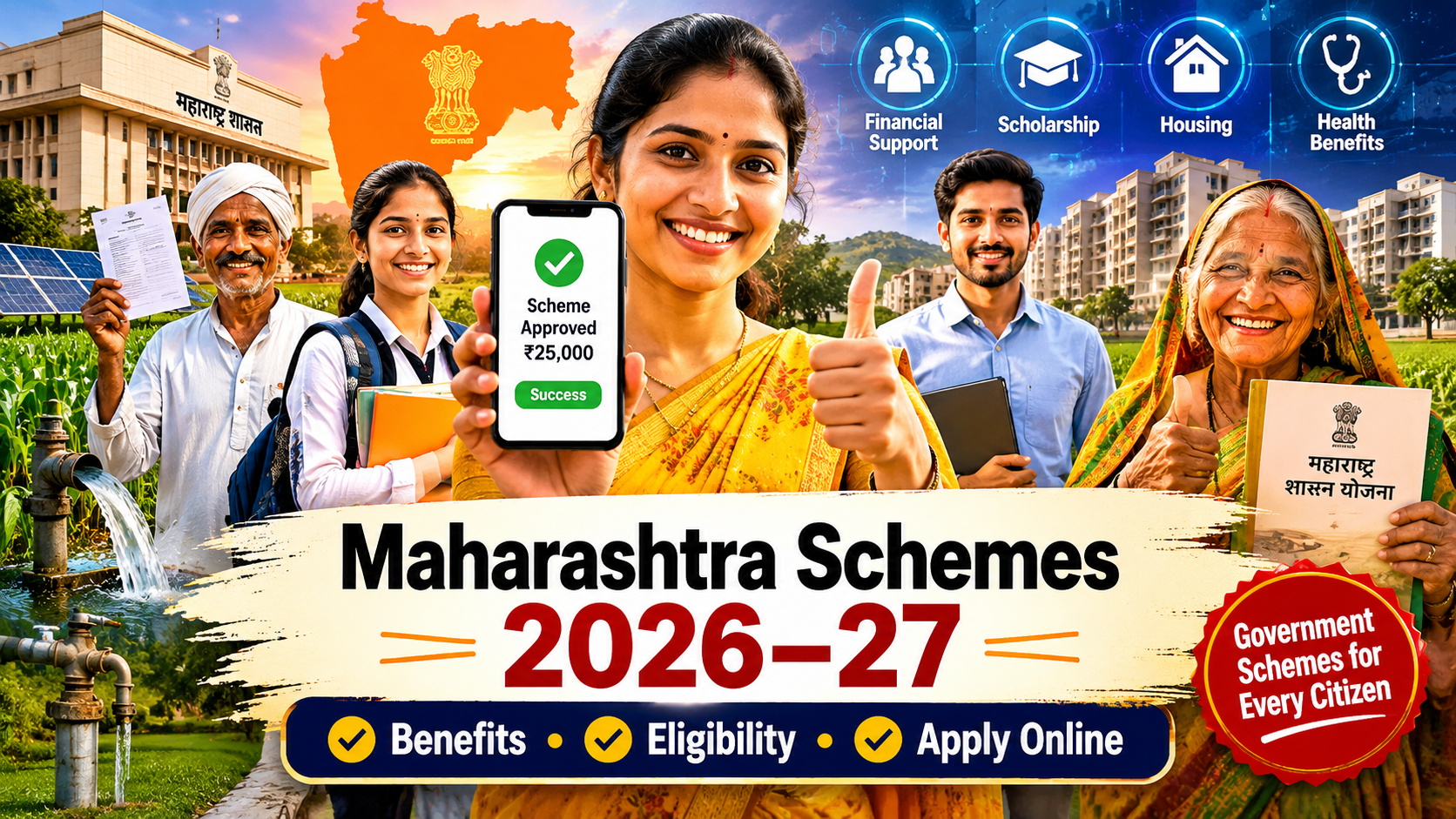
    Maharashtra Government Schemes 2026–27 Full Guide

    Explore Maharashtra Government Schemes 2026–27 with eligibility, benefits, online application steps, documents, and latest yojana updates.

    Maharashtra Government Schemes 2026–27 Full Guide

    Last Updated: 2026

    The Maharashtra Government continues to launch welfare schemes for women, farmers, students, unemployed youth, senior citizens, small business owners, and economically weaker families. However, most citizens still struggle to understand which scheme is right for them, how much benefit they can actually receive, and how to apply online without mistakes.

    Many people hear incomplete information through WhatsApp forwards, YouTube videos, social media reels, or local discussions. As a result, they search terms like “₹3000 monthly scheme,” “₹1500 women scheme,” or “₹6000 Maharashtra scheme” without knowing the real scheme name.

    read also- Ayushman Card Apply Online 2026: Fast ₹5 Lakh Guide

    This detailed Maharashtra Government Schemes 2026–27 guide solves that problem.

    Here, you will find:

    • Complete Maharashtra scheme list
    • Eligibility criteria
    • Monthly and yearly benefits
    • Online application process
    • Official government portals
    • Required documents
    • Beneficiary status check methods
    • Latest 2026–27 updates
    • Women, farmer, student, MSME, and housing schemes

    What Are Maharashtra Government Schemes?

    Maharashtra government schemes are welfare programs launched by the state government to support citizens financially, socially, educationally, and economically.

    These schemes help:

    • Women
    • Farmers
    • Students
    • Senior citizens
    • Unemployed youth
    • SC/ST communities
    • Small business owners
    • Disabled persons
    • Low-income families

    Benefits may include:

    • Monthly financial assistance
    • Scholarships
    • Subsidies
    • Housing support
    • Healthcare coverage
    • Pension benefits
    • Skill development training
    • Loan assistance

    Most applications are processed through:

    • MahaDBT Portal
    • Aaple Sarkar Portal
    • District government offices
    • CSC centers

    Difference Between Central and Maharashtra State Schemes

    Many citizens confuse central schemes with Maharashtra state schemes.

    read also- मुख्यमंत्री ने SRA परियोजना के लिए मोबाइल एप लॉन्च किया।

    Central Government Schemes

    These schemes are launched by the Government of India and apply nationwide.

    Examples include:

    • PM-KISAN
    • Ayushman Bharat
    • PMAY
    • PM-SYM

    Maharashtra State Government Schemes

    These schemes are launched specifically for Maharashtra residents.

    Examples include:

    • Mukhyamantri Majhi Ladki Bahin Yojana
    • Namo Shetkari Mahasanmaan Nidhi
    • Mukhyamantri Yuva Karya Prashikshan Yojana

    In many cases, eligible citizens can receive benefits from both central and state schemes together.

    Maharashtra Government Schemes List 2026–27

    Below is the updated category-wise Maharashtra Government Schemes List for 2026–27.

    Maharashtra Government Schemes for Women

    Mukhyamantri Majhi Ladki Bahin Yojana
    read also- Ladki Bahin Yojana: लाडकी बहनों को अब बैंक से मिलेगा जीरो इंट्रेस्ट पर कर्ज

    Women-focused schemes are among the highest searched welfare programs in Maharashtra.

    Mukhyamantri Majhi Ladki Bahin Yojana

    Mukhyamantri Majhi Ladki Bahin Yojana remains one of Maharashtra’s biggest welfare schemes for women.

    Under this scheme, eligible women receive ₹1,500 per month directly into their bank accounts through Direct Benefit Transfer (DBT).

    Main Benefits

    • ₹1,500 monthly financial assistance
    • Direct bank transfer
    • Support for economically weaker women
    • Improved household financial security

    Eligibility

    • Applicant must be a Maharashtra resident
    • Female applicant required
    • Income limit criteria apply
    • Aadhaar-linked bank account mandatory

    Required Documents

    • Aadhaar Card
    • Income Certificate
    • Domicile Certificate
    • Bank Passbook
    • Passport-size photo
    • Mobile number

    How to Apply

    Applications can be submitted through:

    • Aaple Sarkar Portal
    • Government camps
    • CSC centers

    Lek Ladki Yojana

    Lek Ladki Yojana supports girl child welfare and education in Maharashtra.

    Financial support is provided in stages from birth to higher education.

    Key Benefits

    • Educational assistance
    • Girl child support
    • Reduced financial burden on poor families
    read also- Ladki Bahin Yojana Update: महाराष्ट्र में लाडकी बहिन योजना की 11 वीं किस्त और मिलेगा 40 हजार का लोन

    Mata Surakshit Tar Ghar Surakshit Abhiyan

    This initiative improves maternal healthcare awareness.

    Benefits

    • Pregnancy monitoring
    • Free medical checkups
    • Maternal health awareness
    • Rural healthcare support

    Maharashtra Government Schemes for Farmers

    Farmers remain among the biggest beneficiaries of Maharashtra welfare schemes.

    Namo Shetkari Mahasanmaan Nidhi Yojana

    Under this scheme, eligible farmers receive ₹6,000 annually from the Maharashtra Government.

    When combined with PM-KISAN benefits, total support can reach ₹12,000 per year.

    Main Benefits

    • Direct DBT payment
    • Farmer income support
    • Additional assistance beyond PM-KISAN

    Eligibility

    • Maharashtra farmer
    • Valid land ownership records
    • Aadhaar-linked bank account

    Documents Required

    • Aadhaar Card
    • Land records
    • Bank details
    • Mobile number

    Maharashtra Crop Loan Waiver Scheme 2026

    The Maharashtra Budget 2026–27 introduced major relief measures for farmers, including crop loan waiver support up to ₹2 lakh for eligible farmers.

    Key Objectives

    • Reduce farmer debt burden
    • Support financially stressed farmers
    • Improve agricultural stability

    Mukhyamantri Saur Krushi Pump Yojana

    This scheme provides solar-powered agricultural pumps at subsidized rates.

    Benefits

    • Reduced electricity bills
    • Solar irrigation support
    • Long-term farming savings

    PM Kusum Maharashtra

    PM Kusum promotes solar energy usage in agriculture.

    Main Advantages

    • Solar panel subsidy
    • Renewable energy support
    • Lower irrigation costs

    Maharashtra Government Schemes for Students

    Several Maharashtra schemes support students financially and educationally.

    Maharashtra Post-Matric Scholarship Schemes

    Scholarships are available for:

    • SC students
    • ST students
    • OBC students
    • VJNT students
    • SBC students

    Benefits

    • Tuition fee reimbursement
    • Scholarship support
    • Hostel benefits

    Applications are processed through the MahaDBT Portal.

    Mukhyamantri Yuva Karya Prashikshan Yojana

    This scheme became highly popular because of its monthly stipend support for unemployed youth.

    Monthly Benefits

    • ₹6,000 to ₹10,000 stipend
    • Internship opportunities
    • Skill development support

    Eligibility

    • Maharashtra resident
    • Youth applicant
    • Educational qualification criteria apply

    Main Objective

    To improve employability and practical job readiness.

    Maharashtra AI Policy 2026 Youth Initiatives

    The Maharashtra Government has also announced new AI-focused employment and training initiatives under the Maharashtra AI Policy 2026.

    Focus Areas

    • AI skill development
    • Startup ecosystem growth
    • Technology employment opportunities
    • Digital innovation support

    Maharashtra Housing Schemes

    Housing schemes remain highly searched in Maharashtra.

    Ramai Awas Yojana

    Ramai Awas Yojana supports economically weaker SC/ST families with housing assistance.

    Benefits

    • Financial assistance for home construction
    • Rural housing support
    • Affordable housing assistance

    Modi Awas Gharkul Yojana

    This scheme focuses on providing housing support to poor and economically weaker families.

    Main Features

    • Subsidized housing support
    • Rural development benefits
    • Affordable housing opportunities

    Pradhan Mantri Awas Yojana Maharashtra

    PMAY supports affordable housing for urban and rural beneficiaries.

    Benefits

    • Home loan subsidy
    • Financial assistance
    • Affordable housing support

    Maharashtra Government Schemes for Health

    Healthcare schemes continue to expand across Maharashtra.

    Mahatma Jyotirao Phule Jan Arogya Yojana

    This health insurance scheme provides cashless treatment benefits to eligible families.

    Main Benefits

    • Hospitalization coverage
    • Cashless treatment
    • Financial protection during medical emergencies

    Ayushman Bharat Maharashtra

    Ayushman Bharat provides healthcare insurance support to economically weaker families.

    Coverage

    Eligible families receive health coverage for major medical treatment.

    Aapla Dawakhana Yojana

    This scheme improves access to affordable healthcare in urban areas.

    Main Services

    • Basic treatment
    • Low-cost medicines
    • Primary healthcare facilities
    read also- E Shram Card Benefits 2026: Hidden Perks & Full Guide

    Maharashtra Government Schemes for Business and MSMEs

    Entrepreneurs and small business owners can also benefit from various government schemes.

    MSME Subsidy Scheme Maharashtra

    This scheme supports small businesses and startups through subsidies and incentives.

    Benefits

    • Capital subsidy
    • Industrial incentives
    • Business development support

    Maharashtra Government Loan Schemes for Unemployed

    These schemes help unemployed youth start businesses through financial assistance and subsidized loans.

    Women Startup Support Schemes

    Women entrepreneurs can access:

    • Startup support
    • Subsidized loans
    • Skill development assistance
    • Business mentorship programs

    Maharashtra Government Schemes for Disabled Persons

    Several welfare schemes support disabled citizens in Maharashtra.

    Main Benefits

    • Pension assistance
    • Education support
    • Healthcare assistance
    • Skill development
    • Mobility support

    Applicants may need:

    • Disability certificate
    • Aadhaar Card
    • Income proof
    • Bank account details

    Maharashtra Government Schemes for SC/ST Communities

    Reserved category welfare schemes focus on education, housing, employment, and financial assistance.

    Key Schemes Include

    • Post-Matric Scholarship
    • Hostel schemes
    • Skill development programs
    • Housing support
    • Financial assistance schemes

    Scheme Decoder — You Heard About It, Here’s the Real Scheme

    Many users search using incorrect scheme names. Here are the real schemes behind popular search queries.

    What Is the ₹3,000 Monthly Government Scheme?

    This usually refers to PM-SYM (Pradhan Mantri Shram Yogi Maandhan).

    Under this pension scheme, eligible unorganized sector workers receive ₹3,000 monthly pension after the age of 60 years.

    What Is the ₹6,000 Per Month Scheme in Maharashtra?

    This usually refers to Mukhyamantri Yuva Karya Prashikshan Yojana.

    Eligible youth can receive ₹6,000–₹10,000 monthly stipend during skill training and internships.

    What Is the ₹1,500 Monthly Scheme for Women?

    This refers to Mukhyamantri Majhi Ladki Bahin Yojana.

    Eligible women receive ₹1,500 monthly through DBT transfer.

    What Is the Modi ₹4,000 Scheme?

    This query is usually based on confusion between multiple central and state government schemes such as PM-KISAN and state assistance programs.

    Which Maharashtra Scheme Is Right for You?

    Different schemes target different citizens.

    If You Are a Woman

    You may qualify for:

    • Ladki Bahin Yojana
    • Lek Ladki Yojana
    • Women startup support schemes

    If You Are a Farmer

    You may qualify for:

    • Namo Shetkari Yojana
    • Crop loan waiver scheme
    • PM Kusum
    • Solar pump schemes

    If You Are a Student

    You may qualify for:

    • MahaDBT scholarships
    • Hostel schemes
    • Skill development programs

    If You Are an Unemployed Youth

    You may qualify for:

    • Mukhyamantri Yuva Karya Prashikshan Yojana
    • Startup loan schemes
    • Skill development initiatives

    How to Apply for Maharashtra Government Schemes Online

    Most Maharashtra government schemes now support online applications.

    read also- Ayushman Card Apply Online 2026: Fast ₹5 Lakh Guide

    Apply Through Aaple Sarkar Portal

    Step-by-Step Process

    1. Visit the official portal
    2. Register using mobile number
    3. Verify Aadhaar details
    4. Upload documents
    5. Submit application form

    Apply Through MahaDBT Portal

    Steps

    1. Create student profile
    2. Upload educational documents
    3. Select scholarship scheme
    4. Submit application
    5. Track status online

    Apply Through CSC Centers

    Citizens without internet access can apply through Common Service Centres.

    CSC operators help with:

    • Registration
    • Document upload
    • Form submission
    • Status tracking

    Documents Required for Maharashtra Government Schemes

    Commonly required documents include:

    • Aadhaar Card
    • PAN Card
    • Income Certificate
    • Domicile Certificate
    • Bank Passbook
    • Passport-size photo
    • Mobile number
    • Educational certificates
    • Land records

    How to Check Maharashtra Scheme Application Status

    Citizens can track application status online.

    Methods

    • Aaple Sarkar Portal
    • MahaDBT dashboard
    • Official department portals
    • SMS notifications

    Maharashtra Government Schemes Comparison Table

    Scheme NameBenefitTarget GroupApplication Mode
    Ladki Bahin Yojana₹1,500/monthWomenOnline
    Namo Shetkari₹6,000/yearFarmersOnline
    Yuva Karya Prashikshan₹6,000–₹10,000/monthYouthOnline
    PMAY MaharashtraHousing subsidyFamiliesOnline
    MahaDBT ScholarshipsFee reimbursementStudentsOnline

    New Maharashtra Government Schemes and Updates 2026–27

    Several important updates were announced during Maharashtra Budget 2026–27.

    Major Highlights

    • Crop loan waiver support
    • Women welfare expansion
    • AI employment initiatives
    • Farmer assistance programs
    • Skill development expansion
    • Startup ecosystem support

    These updates significantly increased public search interest around Maharashtra welfare schemes.

    Frequently Asked Questions

    What is the ₹3,000 monthly government scheme?

    It usually refers to PM-SYM pension scheme for unorganized workers.

    What is the ₹6,000 monthly scheme in Maharashtra?

    It refers to Mukhyamantri Yuva Karya Prashikshan Yojana.

    What is Ladki Bahin Yojana?

    It is a Maharashtra government scheme providing ₹1,500 monthly assistance to eligible women.

    How can I apply for Maharashtra government schemes online?

    You can apply through Aaple Sarkar, MahaDBT, or CSC centers.

    What documents are required?

    Usually Aadhaar Card, income certificate, bank passbook, domicile certificate, and mobile number are required.

    Can I apply for multiple schemes?

    Yes, eligible citizens may apply for multiple schemes if rules allow.

    What is MahaDBT?

    MahaDBT is Maharashtra’s Direct Benefit Transfer portal used mainly for scholarships and welfare schemes.

    What is Aaple Sarkar Portal?

    Aaple Sarkar is Maharashtra Government’s citizen service portal for online scheme applications.

    Are there schemes for disabled persons?

    Yes, Maharashtra provides welfare schemes for disabled citizens including pension and education support.

    Are Maharashtra government schemes free?

    Most welfare schemes are free to apply for through official portals.

    Conclusion

    The Maharashtra Government Schemes 2026–27 ecosystem now covers almost every major citizen category including women, farmers, students, unemployed youth, senior citizens, entrepreneurs, and economically weaker families.

    However, simply knowing the scheme name is not enough. Citizens must understand:

    • Eligibility
    • Required documents
    • Official portals
    • Application process
    • Status verification methods

    Schemes like Mukhyamantri Majhi Ladki Bahin Yojana, Namo Shetkari Mahasanmaan Nidhi, and Mukhyamantri Yuva Karya Prashikshan Yojana are expected to remain among the highest searched welfare programs throughout 2026–27.

    Applicants should always verify details through official government portals before submitting applications or sharing personal documents.

    Relevant Official Website Links

    Disclaimer

    This article is published for educational and informational purposes only. Scheme details, eligibility criteria, benefits, application procedures, and government announcements may change over time based on official Maharashtra Government updates.

    Users are strongly advised to verify all information from official government portals before submitting applications or sharing personal documents.

    Official Government Websites:

    We do not represent any government authority. We are not responsible for application rejection, scheme changes, technical portal issues, or financial losses caused by outdated information or third-party actions.

  • Mumbai News: महाराष्ट्र की औद्योगिक भूमिका को कभी नजरअंदाज नहीं किया – सीतारमण

    Mumbai News: महाराष्ट्र की औद्योगिक भूमिका को कभी नजरअंदाज नहीं किया – सीतारमण

    केंद्रीय वित्त मंत्री सीतारमण ने शुरू की एमएसएमई का ‘म्यूचुअल क्रेडिट गारंटी योजना’। योजना के तहत मिलेगा 100 करोड़ रुपए तक का ‘कोलैटरल-फ्री लोन’। सीतारमण ने मुम्बई एक कार्यक्रम में कहा कि देश के बजट सेशन में महाराष्ट्र की औद्योगिक भूमिका को कभी नजरअंदाज नहीं किया।

    Mumbai News: माइक्रो स्मॉल और मीडियम एंटरप्राइजेज (MSME) को प्रोत्साहन देने और वित्तीय सहायता उपलब्ध कराने के उद्देश्य से वित्त मंत्री ने ‘म्यूचुअल क्रेडिट गारंटी योजना’ का शुभारंभ मुम्बई के एक कार्यक्रम में किया। इसके तहत प्लांट, मशीनरी या उपकरणों की खरीद के लिए 100 करोड़ रुपए तक का ‘कोलैटरल-फ्री लोन’ प्रदान किया जाएगा। इस योजना की केंद्रीय बजट में घोषणा की गई थी। जबकि महाराष्ट्र की औद्योगिक नीति को लेकर केंद्रीय वित्त मंत्री निर्मला सीतारमण ने कहा कि इसे कभी नजरअंदाज नहीं किया गया है। (Mumbai News, Never ignored the industrial role of Maharashtra)

    मुम्बई में कार्यक्रम का आयोजन

    बजट के बाद महाराष्ट्र के वित्त राज्य मंत्री पंकज चौधरी के साथ मुलाकात एवं चर्चा के लिए केंद्रीय वित्त मंत्री सीतारमण सोमवार को मुम्बई में थीं। यहां एक कार्यक्रम में उन्होंने महाराष्ट्र की उद्योग हितैषी भूमिका की सराहना की। उन्होंने कहा कि केंद्र सरकार ने आत्मनिर्भर भारत पहल के तहत महाराष्ट्र के हर उद्योग को अनुकूल नीतियों के माध्यम से समर्थन दिया है। (Mumbai News, Never ignored the industrial role of Maharashtra)

    शेयर बाजार की स्थिति

    मौजूदा शेयर बाजार की स्थिति पर बोलते हुए उन्होंने कहा कि भारत में निवेश करने वालों को अच्छा रिटर्न मिल रहे हैं और विदेशी निवेशक इस समय मुनाफा वसूली के लिए भारतीय शेयर बेच रहे हैं। उन्होंने आश्वस्त किया कि भारत की अर्थव्यवस्था मजबूत है और यह उथल-पुथल अस्थाई हो सकती है। (Mumbai News, Never ignored the industrial role of Maharashtra)

    लाभार्थियों को सौंपी फ्लैट की चाबी

    इस दौरान सीतारमण और चौधरी ने ‘स्पेशल विंडो फॉर अफोर्डेबल एंड मिड-इनकम हाउसिंग’ फंड के तहत लाभान्वित होने वाले घर खरीदारों को चाबियां सौंपीं। 24 जनवरी 2025 तक ‘स्वामीह फंड’ के माध्यम से 50,000 से अधिक घर वितरित किए जा चुके हैं और अगले तीन वर्षों में हर साल 20, 000 अतिरिक्त घर देने की योजना बनाई गई है। वित्त सचिव तुहिन कांत पांडेय ने कहा कि भारत का रक्षा उपकरण निर्यात 24, 000 करोड़ के पार पहुंच गया है। जो इस क्षेत्र में देश की बढ़ती आत्मनिर्भरता को दर्शाता है। (Mumbai News, Never ignored the industrial role of Maharashtra)