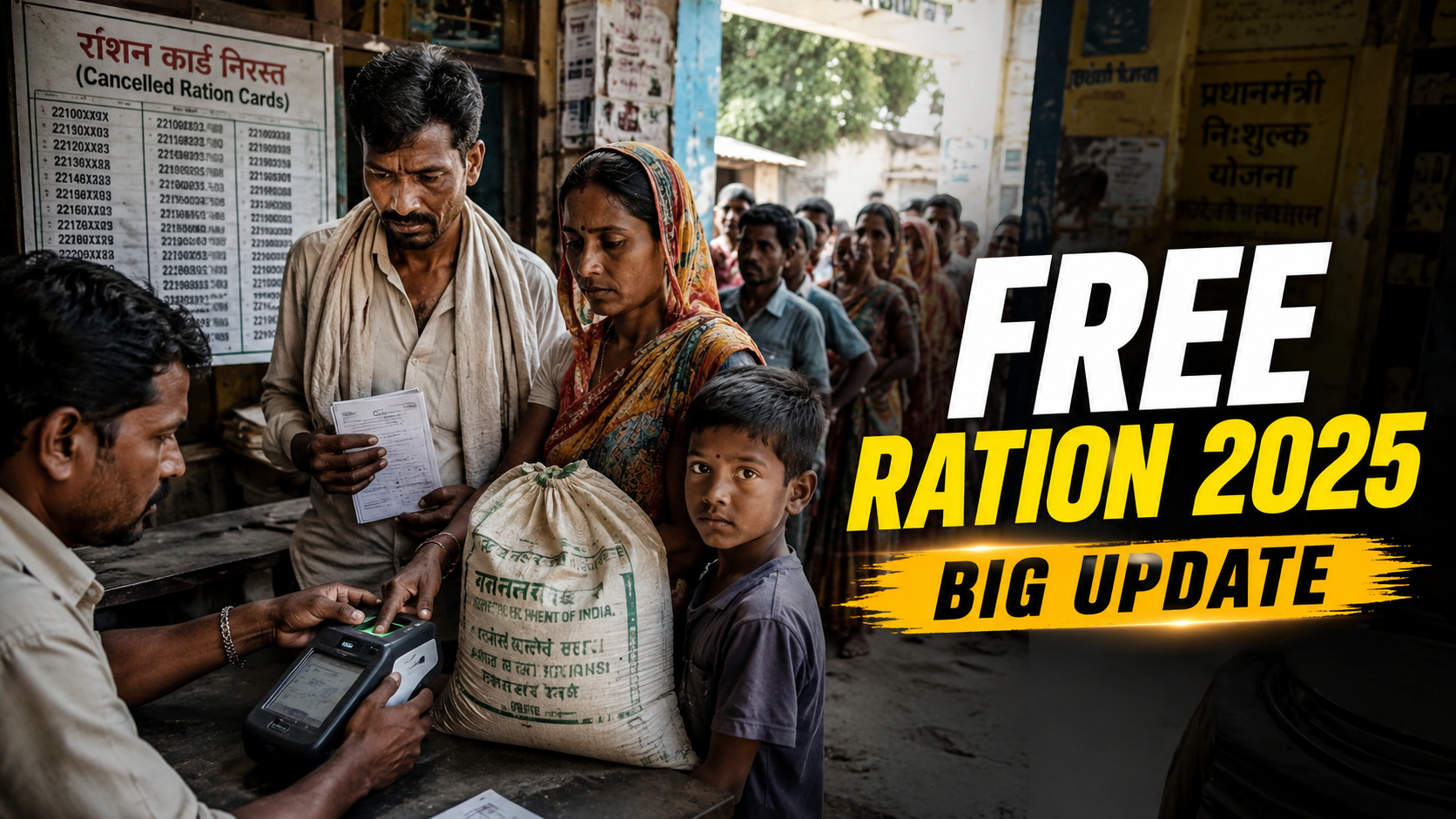
PMGKAY free ration scheme is active till 2028. Check eligibility, latest 2025 updates, ration card rules, and how to apply online.
India’s Free Ration Scheme (PMGKAY) 2026 Complete Update
India’s free ration scheme, officially known as the Pradhan Mantri Garib Kalyan Anna Yojana (PMGKAY), continues to support more than 81 crore people across the country. The scheme remains active till December 2028 and provides free food grains to eligible families under the National Food Security Act (NFSA).
In 2026, the government introduced several important updates. These include mandatory e-KYC verification, removal of ineligible beneficiaries, expansion of digital ration services, and stricter Aadhaar verification rules. Millions of ration card holders are now searching for updated information because rumors about the scheme ending created confusion on social media.
This detailed guide explains everything in simple language. You will learn who is eligible, how much ration is available, how to apply online, how One Nation One Ration Card works, and what to do if your ration card gets cancelled.
read also- Ladki Bahin Yojana: लाडकी बहनों को अब बैंक से मिलेगा जीरो इंट्रेस्ट पर कर्ज
What Is PMGKAY Free Ration Scheme?
The Pradhan Mantri Garib Kalyan Anna Yojana (PMGKAY) is India’s largest food security program. It provides free wheat, rice, and food grains to poor and low-income families through ration shops under the Public Distribution System (PDS).
The scheme was originally launched during the COVID-19 pandemic. However, due to its massive impact on food security, the government extended it for five years from January 2024 to December 2028.
Under the scheme:
- Eligible families receive free food grains every month
- Distribution happens through Fair Price Shops (FPS)
- Aadhaar-based biometric verification is used
- One Nation One Ration Card allows portability across India
read also- Passport Rule 2025: Birth Certificate पर बड़ा सच, वायरल खबरों का पूरा पर्दाफाश
PMGKAY 2026 Key Facts at a Glance
| Feature | Details |
|---|---|
| Scheme Name | Pradhan Mantri Garib Kalyan Anna Yojana |
| Short Name | PMGKAY |
| Launch Year | 2020 |
| Current Validity | Till December 2028 |
| Beneficiaries | 81.35 crore people |
| Monthly Entitlement | 5 kg per person |
| Distribution Method | Public Distribution System |
| Cost to Beneficiary | Completely Free |
| Governing Ministry | Department of Food & Public Distribution |
| Main Objective | Food security for poor households |
Is the Free Ration Scheme Still Active in India?
Yes, the free ration scheme is fully active in 2026.
The Union Cabinet officially approved the continuation of PMGKAY for five years starting from January 1, 2024. Eligible beneficiaries continue receiving free food grains every month without any payment.
Many people believed the scheme was stopped after several social media rumors went viral. However, the government confirmed that the scheme remains operational nationwide.
The current extension is expected to cost the government around ₹11.80 lakh crore over five years.
Latest PMGKAY Updates in 2026
read also- Ayushman Card Apply Online 2026: Fast ₹5 Lakh Guide
Several major changes happened during 2025. These updates directly affect ration card holders.
Mandatory e-KYC Verification
The government made e-KYC compulsory for ration card holders. Beneficiaries now need biometric authentication to continue receiving free ration benefits.
If e-KYC is not completed, the ration card may become inactive temporarily.
Removal of Fake and Ineligible Beneficiaries
The government started a nationwide verification drive to remove fake beneficiaries.
More than 2.25 crore ration cards were reportedly deleted after database verification.
The following people were removed:
- Income tax payers
- Government employees
- Four-wheeler owners in some states
- Duplicate card holders
- Deceased beneficiaries
- Fake Aadhaar-linked accounts
Digital Monitoring Increased
States are now using:
- ePoS machines
- Aadhaar authentication
- Real-time stock monitoring
- Digital grievance systems
This reduced corruption and fake ration distribution significantly.
Why Were 2.25 Crore Beneficiaries Removed?
The government used multiple databases to identify ineligible beneficiaries.
Data was matched with:
- Income tax records
- Vehicle ownership databases
- Corporate affairs records
- Pension databases
- Property ownership records
After verification, states removed beneficiaries considered financially ineligible.
States With Large Beneficiary Removals
| State | Approximate Removals |
|---|---|
| Bihar | 16.9 lakh |
| Haryana | 13.4 lakh |
| Uttar Pradesh | 14 lakh+ |
| Rajasthan | 28 lakh |
| Odisha | 7 lakh |
Many genuine beneficiaries also complained about wrongful removal. Therefore, grievance systems became extremely important in 2026.
Who Is Eligible for PMGKAY Free Ration?
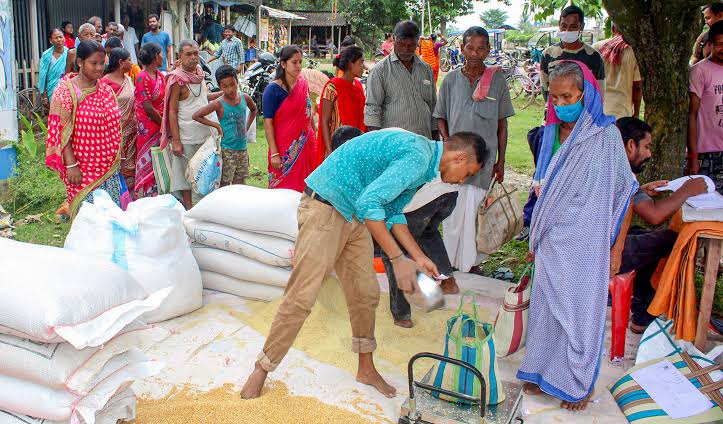
Eligibility depends on your economic condition and ration card category.
Priority Household (PHH)
PHH families receive:
- 5 kg ration per person monthly
- Wheat, rice, or coarse grains
- Completely free distribution
Eligible groups usually include:
- Daily wage workers
- Low-income families
- Rural poor households
- Construction workers
- Landless laborers
- Vulnerable women-led families
read also- E Shram Card Benefits 2026: Hidden Perks & Full Guide
Antyodaya Anna Yojana (AAY)
AAY is for the poorest households.
These families receive:
- 35 kg ration per household monthly
- Highest subsidy benefits
- Additional state-level benefits in some regions
AAY usually covers:
- Destitute families
- Widows without income
- Elderly poor persons
- Disabled beneficiaries
- Tribal households
Who Is NOT Eligible for Free Ration?
In many states, the following people are considered ineligible:
- Income tax payers
- Government employees
- Large landowners
- Families with high electricity usage
- Owners of luxury vehicles
- Business owners above state income limits
Rules differ from state to state.
Types of Ration Cards in India
Different ration cards represent different income groups.
| Card Type | Main Beneficiaries | Benefits |
|---|---|---|
| AAY | Poorest households | 35 kg per household |
| PHH | Low-income families | 5 kg per person |
| BPL | Below poverty line families | State-based benefits |
| APL | Above poverty line | Limited or no subsidy |
Ration Card Colors Explained
Different states use different colors for ration cards.
| Color | Meaning |
|---|---|
| Yellow | AAY category |
| Pink | PHH category |
| White | APL category |
| Blue | State-specific categories |
The color system may vary depending on the state government.
How Much Free Ration Do You Get?
PMGKAY Entitlement Table
| Ration Card Type | Quantity | Distribution Basis |
|---|---|---|
| PHH | 5 kg per person | Monthly |
| AAY | 35 kg per family | Monthly |
Food grains usually include:
- Rice
- Wheat
- Coarse grains
Some states also provide:
- Sugar
- Salt
- Pulses
- Cooking oil
How to Apply for a Ration Card in India
The application process differs slightly across states, but the basic steps are similar.
Step-by-Step Application Process
read also- Maharashtra Government Schemes 2026–27 Full Guide
Step 1: Visit Your State Food Department Portal
Each state has its own ration card portal.
Step 2: Fill the Online Application Form
Enter:
- Name
- Address
- Family details
- Aadhaar number
- Income details
Step 3: Upload Required Documents
Usually required documents include:
- Aadhaar card
- Address proof
- Income certificate
- Passport-size photo
- Mobile number
Step 4: Submit Application
After verification, the ration card gets approved.
Offline Method
You can also apply through:
- Common Service Centers (CSC)
- Food & Civil Supplies offices
- Gram Panchayat offices
How to Link Aadhaar With Ration Card
Aadhaar linking is now extremely important.
Offline Aadhaar Linking
Visit:
- Fair Price Shop
- Ration office
- CSC center
Carry:
- Aadhaar card
- Ration card
- Registered mobile number
Biometric verification is completed instantly.
Online Aadhaar Linking
Some states also allow online linking through their PDS portals.
What Is One Nation One Ration Card (ONORC)?
One Nation One Ration Card allows beneficiaries to collect ration from any state in India.
This is especially useful for migrant workers.
For example:
- A worker from Bihar working in Maharashtra can collect ration in Mumbai
- Family members back home can still collect remaining entitlement
Benefits of ONORC
- Nationwide portability
- No need for a new ration card
- Useful for migrants and workers
- Reduced dependency on home state
read also- PM Kisan 2026 Registration: Easy Way to Get ₹6,000
How to Use ONORC in Another State
Step 1: Visit Any Fair Price Shop
Choose an FPS with ePoS machine support.
Step 2: Provide Ration Card Number
Share:
- Aadhaar number
- Ration card number
Step 3: Complete Biometric Verification
Fingerprint or iris verification is required.
Step 4: Collect Food Grains
The system automatically updates your entitlement.
States Offering Extra Free Benefits
Some states provide additional support beyond PMGKAY.
| State | Extra Benefits |
|---|---|
| Tamil Nadu | Additional rice subsidy |
| Odisha | Pulses distribution |
| Chhattisgarh | Extra rice allocation |
| Delhi | Temporary relief schemes |
| Rajasthan | Additional wheat benefits |
Benefits change frequently depending on state budgets.
How to Check Ration Card Status Online
You can easily check ration card status online.
Method 1: NFSA Portal
Visit the official NFSA portal and select your state.
Method 2: State Food Portal
Search using:
- Ration card number
- Aadhaar number
- Mobile number
Method 3: Mera Ration App
The Mera Ration App helps users:
- Check entitlement
- Track ration history
- Find FPS shops
- Use ONORC services
read also- PM Awas Yojana 2026 Apply Online ₹1.80L Subsidy
Common Problems Faced by Beneficiaries
Fingerprint Authentication Failure
This is common among elderly workers.
Solutions include:
- Iris authentication
- OTP verification
- Manual verification
Ration Not Received
If the FPS dealer refuses ration:
- Ask for transaction receipt
- Contact district food office
- File online grievance
Wrongful Card Cancellation
You can appeal with fresh documents and eligibility proof.
How to File a PMGKAY Complaint
Toll-Free Helpline
Many states provide:
- 1967 helpline
- State PDS complaint numbers
Online Complaint Portals
You can file complaints related to:
- Non-distribution
- Corruption
- Overcharging
- Fake biometric rejection
PMGKAY vs NFSA vs AAY
| Feature | PMGKAY | NFSA | AAY |
|---|---|---|---|
| Main Purpose | Free ration | Food security law | Poorest households |
| Cost | Free | Subsidized | Free/Highly subsidized |
| Target Group | NFSA beneficiaries | Broad food security | Extreme poor |
| Quantity | 5 kg/person | State-based | 35 kg/family |
Impact of PMGKAY on India
PMGKAY became one of the world’s largest welfare programs.
Major Achievements
- Supported 81 crore people
- Reduced hunger during COVID
- Helped migrant workers
- Improved food security
- Reduced extreme poverty
Economic Impact
The scheme increased government expenditure significantly, but it also protected millions of vulnerable households from food inflation.
Digital Transformation in Ration Distribution
India’s ration system changed dramatically after digitization.
Key Technologies Used
- Aadhaar authentication
- ePoS devices
- GPS truck monitoring
- Digital beneficiary databases
- Mobile apps
These technologies reduced fake ration cards and leakage.
Important Documents Required for Ration Card
| Document | Purpose |
|---|---|
| Aadhaar Card | Identity verification |
| Address Proof | Residence verification |
| Income Certificate | Eligibility verification |
| Passport Photos | Application processing |
| Mobile Number | OTP and updates |
State-Wise Ration Card Portals
| State | Portal Type |
|---|---|
| Maharashtra | Maha Food Portal |
| Uttar Pradesh | UP Food Portal |
| Bihar | EPDS Bihar |
| Rajasthan | Rajasthan Food Portal |
| Tamil Nadu | TNPDS Portal |
Always use official government portals only.
Can Your Ration Card Get Cancelled?
Yes, ration cards may be cancelled if:
- e-KYC is incomplete
- Duplicate records exist
- Income exceeds eligibility limit
- Fake documents were used
- Beneficiary is deceased
Wrongful cancellations can be challenged through grievance systems.
How to Protect Your Ration Card From Cancellation
Complete e-KYC Immediately
Do not ignore government notifications.
Keep Aadhaar Updated
Ensure mobile numbers are linked correctly.
Avoid Duplicate Registrations
Use only one active ration card.
Verify Details Regularly
Check status every few months.
Future of PMGKAY in India
The government is focusing on:
- Full digital transparency
- Better portability
- AI-based monitoring
- Stronger fraud detection
- Doorstep delivery experiments
The scheme is expected to remain politically and socially important because it supports food security for millions of households.
Frequently Asked Questions (FAQ)
Is PMGKAY active in 2025?
Yes. The scheme is active till December 2028.
How much ration is free under PMGKAY?
PHH beneficiaries receive 5 kg per person monthly. AAY families receive 35 kg per household.
Can migrant workers use ration cards in another state?
Yes. ONORC allows nationwide portability.
Is Aadhaar mandatory for ration?
In most states, Aadhaar linking and e-KYC are mandatory.
Why was my ration card cancelled?
Possible reasons include failed e-KYC, duplicate records, or income-based ineligibility.
Can I apply for ration card online?
Yes. Most states provide online application portals.
What is the ONORC scheme?
One Nation One Ration Card allows beneficiaries to collect ration anywhere in India.
Is ration completely free now?
Yes. PMGKAY provides food grains free of cost.
How do I check ration card status?
You can check through state portals or the Mera Ration App.
Can cancelled beneficiaries appeal?
Yes. Appeals can be filed through food department offices or grievance portals.
Conclusion
India’s PMGKAY free ration scheme continues to play a critical role in protecting millions of low-income households from hunger and food insecurity. Despite rumors and large-scale beneficiary verification drives, the scheme remains fully active till 2028.
However, the rules are becoming stricter. Aadhaar linking, e-KYC verification, and digital monitoring are now essential for continuing benefits. Beneficiaries should regularly verify their ration card status and complete all mandatory verification steps on time.
For migrant workers, ONORC has become one of the most powerful welfare reforms because it allows ration portability across India. At the same time, grievance systems are becoming more important due to rising complaints related to wrongful deletions and biometric failures.
If you are eligible, keep your documents updated and use only official government portals for any ration-related services.