Tag: Entrepreneurship India

  • Startup Registration in Mumbai: Complete Step-by-Step Guide (2026)

    Startup Registration in Mumbai: Complete Step-by-Step Guide (2026)

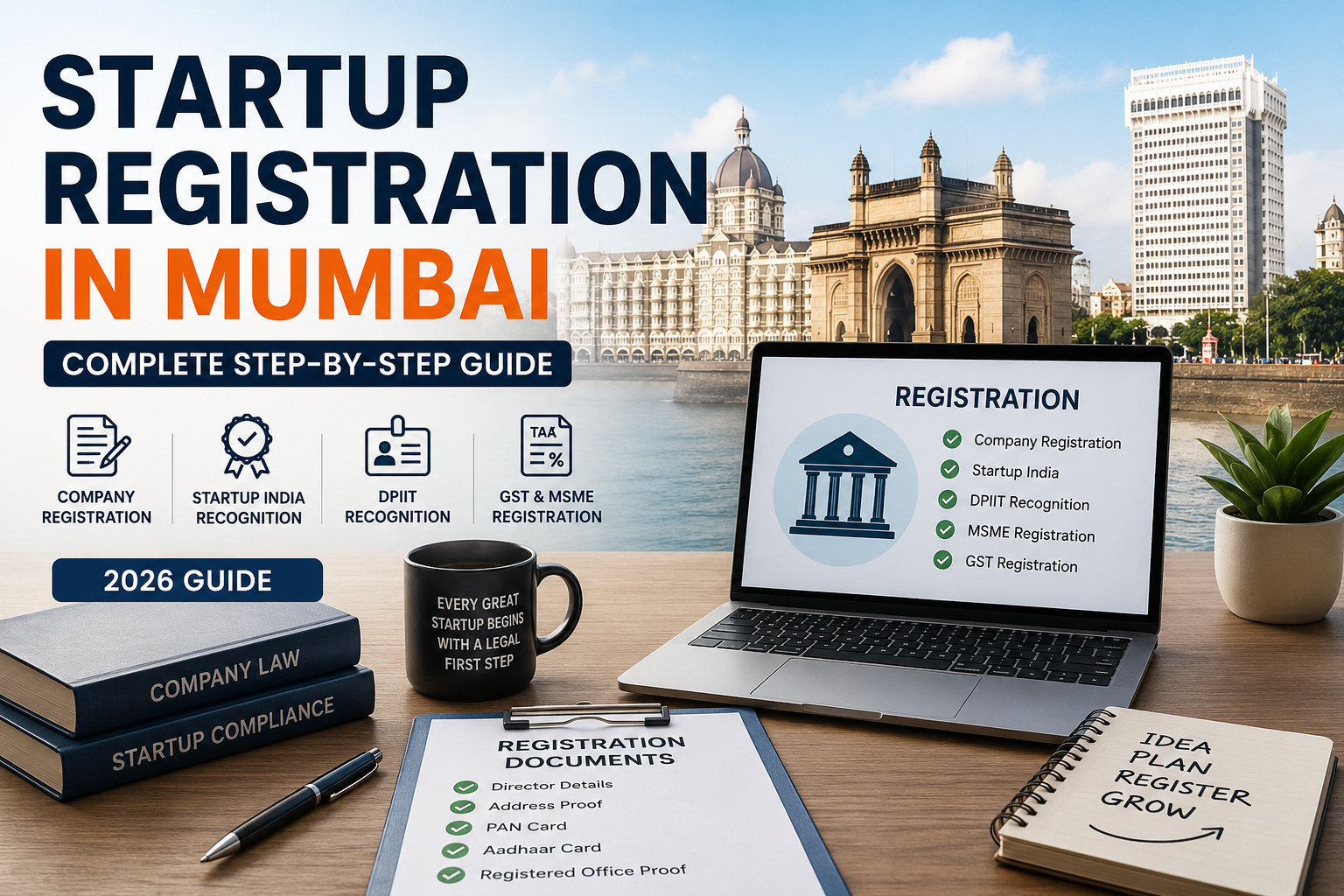
    Learn how to register a startup in Mumbai with this complete 2026 guide covering company registration, Startup India, DPIIT, MSME, GST, costs, and required documents.

    Every successful startup begins with a great idea, but turning that idea into a legally recognized business is the first real milestone. Whether you’re building a technology platform, launching a D2C brand, opening a consultancy, or developing an innovative product, startup registration in Mumbai is an essential step that lays the foundation for long-term growth.

    Many aspiring entrepreneurs delay registration because they believe the process is complicated, expensive, or filled with legal hurdles. In reality, India has made significant progress in simplifying business registration through digital platforms and startup-friendly initiatives. Today, most registration-related processes can be completed online with proper documentation and professional guidance.

    Mumbai, being India’s financial capital, attracts thousands of entrepreneurs every year. The city offers access to investors, customers, mentors, and business opportunities, making it one of the best places to launch a startup. However, operating without the correct legal structure can create challenges when opening a bank account, raising funds, signing contracts, hiring employees, or applying for government benefits.

    That’s why choosing the right business structure and completing the required registrations should be one of your first priorities.

    In this guide, you’ll learn everything you need to know about registering a startup in Mumbai—from selecting the right legal entity to obtaining Startup India recognition, registering under MSME, understanding GST requirements, estimating costs, and avoiding common mistakes.

    Whether you’re a first-time founder, freelancer planning to scale, or an experienced entrepreneur launching a new venture, this guide will help you understand the registration process in a simple and practical way.

    read also- Best SIP Plans for Beginners in India 2026 – Smart SIP Strategy for Long-Term Wealth Creation

    Why Startup Registration Is Important

    Many entrepreneurs begin by testing their business idea informally. While this approach works during the initial validation stage, operating without proper registration becomes risky as the business grows.

    Registering your startup offers several important advantages.

    Builds Business Credibility

    Customers, investors, banks, and corporate clients are more likely to trust a legally registered business than an unregistered one. A registered entity demonstrates professionalism and commitment.

    Makes Fundraising Easier

    Most angel investors, venture capital firms, and financial institutions prefer investing in legally registered companies. If you plan to raise funds in the future, registration is almost always necessary.

    Opens a Current Bank Account

    Business transactions should ideally be separated from personal finances. Registration enables you to open a business current account, improving financial management and accounting.

    Protects Founders

    Depending on the legal structure you choose, registration can provide limited liability protection. This helps safeguard personal assets from certain business-related risks.

    Improves Business Opportunities

    Many government tenders, corporate contracts, startup programs, and incubators require businesses to be legally registered before applying.

    read also- How to Improve CIBIL Score Fast: 10 Smart Fixes That Work

    Choosing the Right Business Structure

    One of the most important decisions you’ll make before registration is selecting the appropriate legal structure. The right choice depends on factors such as the number of founders, investment plans, liability, taxation, and future growth.

    Below are the most common business structures for startups in Mumbai.

    Comparison Table: Sole Proprietorship vs LLP vs Private Limited Company

    FeatureSole ProprietorshipLimited Liability Partnership (LLP)Private Limited Company
    Best ForFreelancers, Consultants, Small BusinessesProfessional Firms, Agencies, Small StartupsScalable Startups, Tech Companies, Fundraising
    Minimum Owners12 Partners2 Directors & 2 Shareholders
    Separate Legal Entity❌ No✅ Yes✅ Yes
    Limited Liability❌ No✅ Yes✅ Yes
    Ease of Registration⭐⭐⭐⭐⭐ Very Easy⭐⭐⭐⭐ Easy⭐⭐⭐ Moderate
    Compliance RequirementsLowModerateHigh
    Fundraising CapabilityVery LimitedLimitedExcellent
    Suitable for Investors❌ No⚠️ Limited✅ Yes
    Business CredibilityModerateHighVery High
    TaxationPersonal Income TaxLLP Tax RatesCorporate Tax Rates
    Business ContinuityDepends on OwnerBetterExcellent
    Government Startup BenefitsLimitedAvailable (if eligible)Available (if eligible)
    Ideal for Long-Term Growth❌ Limited✅ Good✅ Excellent

    Quick Recommendation

    If You Are…Recommended Structure
    Freelancer or Individual ProfessionalSole Proprietorship
    Two or More Professionals Starting a BusinessLLP
    Planning to Build a Scalable StartupPrivate Limited Company
    Looking for Angel or VC FundingPrivate Limited Company
    Launching a SaaS, AI, FinTech, or Tech StartupPrivate Limited Company
    Running a Consulting or Service-Based BusinessLLP

    💡 Pro Tip

    Don’t choose a business structure only because it’s cheaper to register. Choose one that aligns with your long-term goals, funding plans, ownership structure, and expected growth. Changing your business structure later can involve additional costs, paperwork, and compliance.

    read also- Best Work From Home Jobs in India With High Income

    1. Sole Proprietorship

    A sole proprietorship is the simplest business structure and is generally suitable for freelancers, consultants, small retailers, and individual service providers.

    Advantages

    • Easy to start.
    • Low compliance requirements.
    • Minimal registration cost.
    • Complete control over business decisions.

    Limitations

    • No separate legal identity.
    • Unlimited personal liability.
    • Difficult to attract investors.
    • Limited scalability.

    This structure is suitable for individuals testing a business idea before expanding.

    2. Partnership Firm

    If two or more people plan to run a business together, a traditional partnership can be an option.

    Advantages

    • Easy to establish.
    • Shared investment.
    • Shared responsibilities.
    • Lower compliance than companies.

    Limitations

    • Partners generally have unlimited liability.
    • Ownership disputes may arise without a well-drafted partnership deed.

    3. Limited Liability Partnership (LLP)

    An LLP combines the flexibility of a partnership with limited liability protection.

    It has become a popular choice among consultants, agencies, professional service firms, and small startups.

    Advantages

    • Limited liability.
    • Separate legal identity.
    • Better business credibility.
    • Moderate compliance.

    Best For

    • Consulting firms.
    • Marketing agencies.
    • IT service providers.
    • Professional firms.
    • Small technology startups.

    4. Private Limited Company

    For startups planning to scale, raise investments, or build a large business, a Private Limited Company is generally the preferred structure.

    This is also the structure most commonly preferred by angel investors and venture capital firms.

    Advantages

    • Separate legal identity.
    • Limited liability.
    • Easier fundraising.
    • Better brand credibility.
    • Suitable for long-term growth.

    Best For

    • Technology startups.
    • SaaS companies.
    • FinTech startups.
    • AI startups.
    • Healthcare startups.
    • Consumer brands.
    • Businesses planning to raise external funding.

    Although compliance requirements are higher than those of a sole proprietorship or LLP, the long-term advantages often outweigh the additional responsibilities.

    Startup-Registration-mumbai

    Which Business Structure Should You Choose?

    There is no one-size-fits-all answer.

    If you’re starting alone with a small budget and want to validate an idea, a Sole Proprietorship may be sufficient.

    If you’re building a professional services business with one or more partners, an LLP can be a practical choice.

    If your goal is to create a scalable startup, attract investors, and build a recognizable brand, a Private Limited Company is generally the most suitable option.

    Choosing the right structure at the beginning can save significant time, money, and administrative effort as your business grows.

    Excellent. Ab isi article ka Part 2 continue karte hain. Yeh same article ka continuation hai.

    read also- How to Start a Blog in India and Earn Money Fast

    Documents Required for Startup Registration in Mumbai

    Before beginning the registration process, make sure all required documents are ready. Having the correct paperwork in advance helps avoid unnecessary delays and makes the application process much smoother.

    Although the exact requirements may vary depending on the business structure, most startups will need the following documents.

    Identity Proof

    Every founder or director must provide a valid government-issued identity proof such as:

    • Aadhaar Card
    • PAN Card
    • Passport (if applicable)
    • Voter ID (in some cases)

    Among these, PAN and Aadhaar are the most commonly required documents for Indian founders.

    Address Proof

    Each director or partner should also submit a recent address proof, such as:

    • Aadhaar Card
    • Passport
    • Driving Licence
    • Utility Bill
    • Bank Statement

    The address proof should generally be recent and clearly display the applicant’s name and address.

    Registered Office Address Proof

    Every company must have a registered office address.

    The following documents are generally accepted:

    • Electricity Bill
    • Property Tax Receipt
    • Water Bill
    • Rent Agreement (if the property is rented)
    • No Objection Certificate (NOC) from the property owner, where applicable

    A startup does not necessarily need a commercial office. In many cases, a residential address can be used as the registered office, subject to compliance with applicable rules.

    Passport-size Photographs

    Recent passport-size photographs of all directors or partners may be required for documentation and verification purposes.

    Email Address and Mobile Number

    Every director should have an active:

    • Email ID
    • Mobile Number

    Most official communications and OTP-based verifications are completed through these.

    Step-by-Step Startup Registration Process in Mumbai

    Many first-time entrepreneurs assume company registration involves lengthy paperwork and multiple office visits. Fortunately, much of the process can now be completed online.

    Here’s how it typically works.

    Step 1: Decide Your Business Structure

    The first step is selecting the appropriate legal entity.

    For example:

    • Sole Proprietorship
    • Partnership Firm
    • LLP
    • Private Limited Company

    Most startups planning future investment choose a Private Limited Company, while freelancers and consultants often prefer a Sole Proprietorship or LLP.

    Choosing the right structure from the beginning helps avoid unnecessary restructuring later.

    read also- Affiliate Marketing India Guide That Can Unlock Huge Earnings

    Step 2: Obtain a Digital Signature Certificate (DSC)

    Since company registration is completed electronically, directors are required to digitally sign various documents.

    A Digital Signature Certificate (DSC) functions like an electronic signature and is used while submitting registration forms.

    Without a DSC, online incorporation documents cannot be signed.

    Step 3: Apply for Director Identification Number (DIN)

    Anyone who wishes to become a director of a company must obtain a Director Identification Number (DIN).

    The DIN acts as a unique identification number for company directors and remains valid throughout their lifetime.

    Step 4: Reserve the Company Name

    Choosing a company name is more important than many founders realize.

    Your company name should:

    • Be unique.
    • Not resemble an existing registered company.
    • Avoid trademark conflicts.
    • Reflect your business identity.

    It’s a good idea to prepare multiple name options because your first choice may not always be approved.

    Step 5: File Incorporation Documents

    Once the name is approved, the incorporation documents are submitted to the concerned authorities.

    These documents generally include:

    • Director details
    • Registered office information
    • Company objectives
    • Shareholding pattern
    • Required declarations

    Accuracy at this stage is extremely important because mistakes can delay the registration process.

    Step 6: Receive the Certificate of Incorporation

    After successful verification, the company receives its Certificate of Incorporation.

    This document officially confirms that your company has been legally incorporated.

    At this point, your startup becomes a recognized legal entity.

    Step 7: PAN and TAN Allotment

    During incorporation, the company is generally allotted:

    • Permanent Account Number (PAN)
    • Tax Deduction and Collection Account Number (TAN)

    These are essential for taxation, banking, and other statutory compliances.

    Step 8: Open a Business Current Account

    Once incorporation is complete, the next step is opening a business current account.

    Avoid using your personal savings account for business transactions.

    A dedicated business account makes accounting, tax filing, and financial management much easier.

    Startup India Registration

    Registering a company and obtaining Startup India recognition are two different processes.

    Many entrepreneurs mistakenly believe that incorporating a company automatically makes it a Startup India-recognized startup. This is not correct.

    Startup India recognition is a separate process designed to support eligible innovative businesses.

    Recognized startups may become eligible for various benefits, subject to meeting the applicable criteria.

    Some potential advantages include:

    • Easier participation in government programs.
    • Access to startup networking opportunities.
    • Eligibility for certain support schemes.
    • Recognition within the startup ecosystem.

    However, not every newly registered company automatically qualifies. Applicants must satisfy the prescribed eligibility conditions.

    DPIIT Recognition

    If your startup meets the required conditions, you can also apply for DPIIT (Department for Promotion of Industry and Internal Trade) Recognition.

    This recognition plays an important role in the Indian startup ecosystem and may provide access to benefits introduced under the Startup India initiative.

    To improve the chances of approval, ensure that your business:

    • Is genuinely innovative.
    • Has a scalable business model.
    • Is working towards creating employment or wealth generation.
    • Meets the latest eligibility requirements prescribed by the government.

    DPIIT recognition is particularly valuable for startups seeking credibility, participation in government initiatives, and access to certain startup-specific benefits.

    Excellent. Ab is article ka Final Part complete karte hain. Iske baad article 100% publish-ready hoga.

    MSME Registration for Startups

    Once your startup is legally registered, the next step is to consider MSME (Micro, Small and Medium Enterprises) registration, now known as Udyam Registration.

    Although it is not mandatory for every business, many startups choose to register because it can provide additional recognition and easier access to certain government schemes and financial support.

    Depending on eligibility and applicable government policies, registered MSMEs may receive benefits such as:

    • Easier access to business loans
    • Better opportunities in government procurement
    • Protection against delayed payments
    • Various support schemes for small businesses

    If your startup falls under the MSME category, completing Udyam Registration is generally a good business decision.

    Is GST Registration Mandatory?

    One of the most common questions asked by new entrepreneurs is whether GST registration is compulsory.

    The answer depends on the nature of your business.

    GST registration may become necessary if your startup:

    • Crosses the prescribed turnover limit under GST law.
    • Sells goods or services in situations where GST registration is mandatory under applicable rules.
    • Operates through certain online marketplaces.
    • Engages in interstate taxable supplies in circumstances covered by GST regulations.

    Because GST requirements can vary depending on your business model, it’s always advisable to consult a qualified tax professional before making a decision.

    How Much Does Startup Registration Cost in Mumbai?

    The cost of registering a startup depends on several factors, including:

    • Business structure
    • Government fees
    • Professional service charges
    • Number of directors or partners
    • Authorized capital
    • Digital Signature Certificates (DSCs)
    • Stamp duty and state-specific charges

    As a result, there is no single fixed registration cost that applies to every startup.

    Instead of focusing only on the lowest price, founders should choose experienced professionals who ensure accurate documentation and legal compliance.

    Errors during registration often cost far more to correct later than doing it properly the first time.

    How Long Does Startup Registration Take?

    The timeline varies depending on:

    • Business structure
    • Accuracy of submitted documents
    • Name approval process
    • Government processing time
    • Additional clarifications, if required

    If all documents are prepared correctly and there are no objections, incorporation is generally completed much faster than it was a few years ago because most procedures are now handled online.

    Common Mistakes First-Time Founders Should Avoid

    Many entrepreneurs become so excited about launching their startup that they overlook basic legal and financial planning.

    Avoiding these common mistakes can save both time and money.

    Choosing the Wrong Business Structure

    Selecting a Sole Proprietorship when you plan to raise investor funding later may require restructuring your business.

    Always choose a structure that aligns with your long-term goals.

    Selecting a Name Without Checking Availability

    Many founders finalize branding before confirming whether the company name or trademark is available.

    Always verify name availability before investing in logos, websites, and marketing materials.

    Mixing Personal and Business Finances

    Using personal bank accounts for business transactions creates accounting and taxation complications.

    Maintain separate financial records from the beginning.

    Ignoring Compliance Requirements

    Registering the company is only the first step.

    Businesses must also comply with:

    • Annual filings
    • Income tax requirements
    • GST (where applicable)
    • Accounting standards
    • Other legal obligations

    Ignoring compliance may lead to penalties and unnecessary legal complications.

    Delaying Trademark Registration

    Your company name and brand identity are valuable business assets.

    If you plan to build a long-term brand, consider protecting your trademark at an early stage.

    Should You Register the Startup Yourself or Hire a Professional?

    Many online platforms make company registration appear simple.

    While straightforward cases may be manageable, startups planning rapid growth, investor funding, or multiple founders often benefit from professional guidance.

    A qualified Chartered Accountant (CA) or Company Secretary (CS) can help ensure that:

    • The correct business structure is selected.
    • Documentation is accurate.
    • Compliance requirements are understood.
    • Future legal issues are minimized.

    Professional advice at the beginning often saves significant time and cost later.

    Final Thoughts

    Registering a startup is much more than completing legal paperwork—it’s the first formal step toward building a sustainable business.

    For entrepreneurs in Mumbai, choosing the right business structure, maintaining proper compliance, and understanding government registration requirements can create a strong foundation for future growth.

    Whether you’re launching a technology startup, an online business, a consulting firm, or a product-based company, proper registration builds credibility with customers, investors, banks, and business partners.

    Instead of rushing through the process, take time to understand your business goals, choose the appropriate legal entity, and complete each step carefully.

    A well-registered startup is better positioned to attract investment, scale operations, and compete confidently in one of India’s most dynamic business ecosystems.

    Frequently Asked Questions (FAQs)

    1. Can I register a startup online in Mumbai?

    Yes. Most incorporation and registration procedures can now be completed online through the relevant government portals with the required documents.

    2. Which business structure is best for startups?

    For startups planning to raise investment and scale operations, a Private Limited Company is generally the preferred option. However, the right structure depends on your business model and goals.

    3. Is Startup India registration compulsory?

    No. Startup India recognition is separate from company incorporation and is not mandatory for every business.

    4. Do I need GST registration immediately?

    Not always. GST registration depends on factors such as turnover, business activities, and legal requirements under GST law.

    5. Can a home address be used as the registered office?

    Yes. In many cases, a residential address can be used as the registered office, subject to applicable documentation and legal requirements.

    6. How many directors are required for a Private Limited Company?

    A Private Limited Company generally requires a minimum of two directors under Indian company law.

    7. Is MSME registration mandatory?

    No. Udyam (MSME) registration is generally optional, but many eligible businesses choose it to access available government support and recognition.

    8. How long does company registration usually take?

    The timeline depends on document accuracy, approvals, and government processing. Complete and error-free applications are usually processed faster.

    Conclusion

    Mumbai continues to be one of India’s most attractive destinations for entrepreneurs. However, a great business idea alone isn’t enough. Registering your startup correctly gives it the legal identity, credibility, and structure needed to grow confidently.

    By understanding the registration process, choosing the right legal entity, maintaining compliance, and planning for future expansion, founders can avoid unnecessary complications and focus on building a successful business.

    Think of registration not as paperwork—but as the first investment in your startup’s future.
  • Top 40+ Startup Companies in Mumbai: Fast-Growing Businesses in 2026

    Top 40+ Startup Companies in Mumbai: Fast-Growing Businesses in 2026

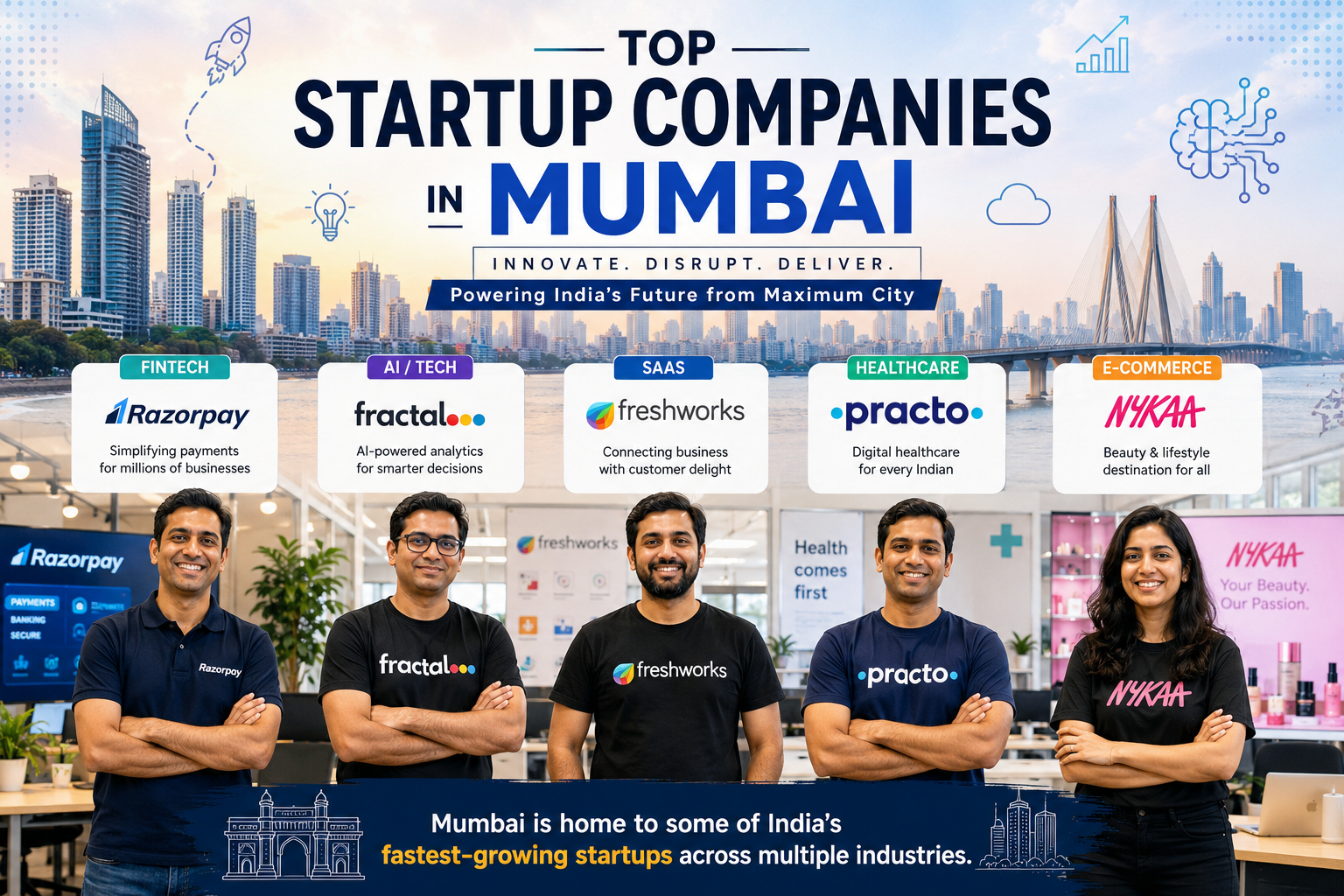
    Explore 40+ top startup companies in Mumbai across fintech, AI, SaaS, healthcare, gaming, and e-commerce. Learn their success stories and business insights.

    Mumbai has long been recognized as India’s financial capital, but over the last decade, it has also emerged as one of the country’s most influential startup hubs. Thousands of entrepreneurs choose the city every year to launch innovative businesses because Mumbai offers something few places can match—a powerful combination of investors, corporate headquarters, skilled professionals, a large consumer market, and access to capital.

    From digital payments and online investments to healthcare, artificial intelligence, logistics, e-commerce, and software services, startup companies in Mumbai are transforming the way millions of Indians live and work. Some began with only a handful of employees working from small offices or shared coworking spaces. Today, many have grown into nationally recognized brands serving millions of customers and creating thousands of jobs.

    What makes Mumbai’s startup ecosystem unique is its diversity. Unlike cities known primarily for technology, Mumbai combines finance, media, retail, manufacturing, entertainment, and technology in one ecosystem. This allows founders to build businesses across multiple industries while staying close to customers, investors, and strategic partners.

    Whether you’re an aspiring entrepreneur looking for inspiration, a job seeker exploring career opportunities, an investor researching the market, or simply curious about India’s startup landscape, this guide highlights 46 of the most successful and promising startup companies in Mumbai, covering their business model, industry, growth journey, and the key lessons entrepreneurs can learn from them.

    Instead of simply listing company names, we’ll look at what each startup does, how it grew, why it became successful, and what entrepreneurs can learn from its journey.

    read also- Affiliate Marketing India Guide That Can Unlock Huge Earnings
    IndustryCompanies Covered
    FinTech6
    AI4
    SaaS5
    EdTech3
    HealthTech4
    D2C7
    Gaming3
    Logistics2
    Media3
    Others9

    Why Mumbai Produces Successful Startups

    A startup doesn’t succeed because of its location alone, but the right ecosystem can dramatically improve its chances. Mumbai gives entrepreneurs access to many of the ingredients needed for long-term growth.

    Some of the city’s biggest advantages include:

    • Easy access to venture capital firms and angel investors.
    • Headquarters of major banks and financial institutions.
    • A highly skilled workforce across technology, finance, marketing, and design.
    • One of India’s largest consumer markets.
    • Excellent business connectivity through air, rail, road, and ports.
    • A thriving community of founders, mentors, incubators, and accelerators.
    • Strong demand for innovative products and services.

    These advantages have helped many startups grow from local businesses into companies with national and global reach.


    1. Zepto

    Industry: Quick Commerce

    One of the biggest startup success stories to emerge from Mumbai in recent years is Zepto. The company entered the highly competitive grocery delivery market with a simple yet ambitious promise—deliver daily essentials in just a few minutes.

    Instead of competing solely on discounts, Zepto focused heavily on logistics, warehouse optimization, and technology. By establishing strategically located dark stores across cities, it significantly reduced delivery times and improved operational efficiency.

    Today, Zepto serves millions of customers and has become one of India’s most recognized quick-commerce brands. The company has also attracted substantial investment from global investors, demonstrating confidence in its business model and long-term growth potential.

    Key Lesson for Entrepreneurs:
    Speed alone isn’t enough. Sustainable growth comes from building strong operational systems behind the customer experience.

    read also- How to Start a Blog in India and Earn Money Fast

    2. upGrad

    Industry: EdTech

    Founded with the vision of making high-quality education accessible to working professionals, upGrad has become one of India’s leading online learning platforms.

    The company offers courses in technology, management, artificial intelligence, digital marketing, finance, and data science in collaboration with universities and industry experts.

    Instead of targeting only students, upGrad recognized the growing demand among professionals looking to upgrade their skills and advance their careers. This clear understanding of market demand helped the company scale rapidly.

    Why It Stands Out

    • Industry-focused curriculum.
    • Partnerships with universities.
    • Career assistance.
    • Global learner community.

    Entrepreneurial Insight

    Businesses that solve long-term problems often build stronger customer loyalty than those chasing short-term trends.


    3. Pepperfry

    Industry: E-Commerce & Furniture

    Buying furniture online was once considered difficult because customers preferred seeing products in person before making expensive purchases.

    Pepperfry challenged this belief by creating a platform that combined online convenience with carefully designed offline experience centers.

    By focusing on customer trust, product quality, and efficient delivery, the company helped transform India’s online furniture market.

    Today, Pepperfry is among the country’s best-known furniture and home décor brands.

    Key Learning

    Sometimes innovation isn’t about creating a completely new product—it can also mean improving the buying experience.

    bookmyshow

    4. BookMyShow

    Industry: Entertainment Technology

    Booking movie tickets once meant standing in long queues outside cinema halls.

    BookMyShow simplified this experience by bringing ticket booking online and later expanding into concerts, sports events, live entertainment, and experiences.

    Today, millions of users rely on the platform to discover and book entertainment events across India.

    Its success demonstrates how solving a simple everyday inconvenience can create a business used by millions.


    5. The Souled Store

    Industry: Direct-to-Consumer (D2C)

    The Souled Store started by selling officially licensed pop culture merchandise inspired by movies, television shows, comics, sports teams, and gaming franchises.

    Instead of competing with traditional fashion brands, it built a loyal community around fandom culture.

    Over time, the company expanded into casual wear, accessories, and lifestyle products while maintaining its youthful identity.

    Success Factors

    • Strong brand personality.
    • Licensed merchandise.
    • Community-driven marketing.
    • High customer engagement.

    Lesson

    Building an emotional connection with customers often creates stronger brand loyalty than competing only on price.

    incred

    6. InCred

    Industry: FinTech

    InCred is one of Mumbai’s leading fintech companies focused on making loans more accessible for individuals, students, and businesses.

    Using technology-driven credit assessment and faster approval processes, the company has simplified lending for many customers who previously faced lengthy paperwork and delays.

    As digital lending continues to grow in India, InCred has established itself as an important player in the financial services sector.


    7. Rebel Foods

    Industry: Cloud Kitchen

    Rebel Foods changed the restaurant industry by proving that successful food businesses don’t always need expensive dine-in locations.

    The company operates multiple food brands through cloud kitchens, preparing meals exclusively for online delivery.

    This asset-light model enables faster expansion into new cities while keeping operational costs relatively low.

    Today, Rebel Foods manages several well-known food brands and serves millions of customers across multiple countries.

    Business Lesson

    Sometimes the biggest innovation comes from rethinking the traditional business model instead of improving the product alone.

    kissht

    8. Kissht

    Industry: FinTech

    Kissht has become a well-known digital lending platform by offering quick personal loans and buy-now-pay-later (BNPL) solutions.

    Its technology-first approach has helped simplify the borrowing process for consumers who need faster access to credit.

    As digital financial services continue expanding across India, companies like Kissht demonstrate how technology can improve financial inclusion.

    read also- Credit Score Kya Hota Hai? | CIBIL Score Kaise Check Kare Aur Badhaye (2026 Guide)

    9. Miko

    Industry: Educational Robotics & AI

    Miko develops interactive AI-powered robots designed to make learning engaging for children.

    Combining artificial intelligence, robotics, and educational content, the company has expanded beyond India into international markets.

    Its products demonstrate how Indian startups are increasingly building globally competitive technology.

    10. Purplle

    Industry: Beauty & Cosmetics E-commerce

    When online beauty shopping was still gaining momentum in India, Purplle identified an opportunity to build a platform dedicated exclusively to beauty and personal care products. Instead of becoming a general marketplace, the company focused on creating a specialized shopping experience for customers looking for skincare, makeup, haircare, wellness, and grooming products.

    Over the years, Purplle has expanded its portfolio by introducing private-label brands alongside well-known national and international beauty products. This strategy helped the company improve profit margins while giving customers more choices across different price segments.

    Today, Purplle has become one of India’s leading beauty e-commerce companies, competing with some of the biggest players in the industry.

    What Entrepreneurs Can Learn

    Specialization often creates stronger customer trust than trying to serve every market.


    11. CleverTap

    Industry: SaaS / Customer Engagement

    CleverTap is one of Mumbai’s most successful SaaS companies, providing customer engagement and retention solutions for businesses worldwide.

    Instead of focusing only on acquiring new users, CleverTap helps businesses understand customer behavior, improve engagement, and increase long-term retention through data analytics and personalized communication.

    Its platform is used by companies across industries including fintech, e-commerce, gaming, healthcare, travel, and media.

    Why CleverTap Became Successful

    • Strong product-market fit.
    • Global customer base.
    • Continuous product innovation.
    • Enterprise-focused business model.

    Business Lesson

    Retaining existing customers is often more profitable than constantly acquiring new ones.


    12. MoEngage

    Industry: Marketing Technology (MarTech)

    MoEngage has built a powerful customer engagement platform that enables businesses to communicate with users across multiple digital channels.

    Brands use its technology for:

    • Push notifications
    • Email marketing
    • Customer analytics
    • In-app messaging
    • Personalization
    • Customer journey automation

    With businesses increasingly relying on data-driven marketing, MoEngage has positioned itself as a trusted technology partner for enterprises across the globe.

    Key Takeaway

    Businesses that solve problems for other businesses often benefit from recurring revenue and long-term customer relationships.

    housing-com

    13. Housing.com

    Industry: PropTech

    Searching for a home was once a frustrating process involving newspaper advertisements, brokers, and countless site visits.

    Housing.com changed this by making property discovery digital, transparent, and user-friendly.

    The platform enables users to search for:

    • Apartments
    • Villas
    • Commercial properties
    • Rental homes
    • New projects

    Its detailed property listings, photographs, location information, and search filters significantly improved the real estate search experience.

    Entrepreneurial Lesson

    Even traditional industries can be transformed through better technology and improved user experience.

    read also- Best Credit Card in India 2026 for Cashback, Rewards & Lifetime Free Options

    14. MyGlamm

    Industry: Beauty & D2C

    MyGlamm has successfully combined beauty products with digital content, influencer marketing, and community engagement.

    Rather than relying solely on conventional advertising, the brand invested heavily in content creation, beauty tutorials, and creator collaborations, helping it build a loyal customer base.

    Today, MyGlamm has evolved into much more than a cosmetics company—it represents a complete beauty ecosystem.

    Key Learning

    Modern consumers often connect with brands through stories and communities, not just products.


    15. Fynd

    Industry: Retail Technology

    Fynd bridges the gap between offline retailers and online shoppers.

    Its technology enables brands to sell inventory from physical stores through digital channels, improving inventory management while increasing sales opportunities.

    The platform has played an important role in helping retailers embrace omnichannel commerce.

    Business Insight

    Sometimes the best startup ideas improve existing businesses instead of replacing them.

    Bombay-Shaving-Company

    16. Bombay Shaving Company

    Industry: Men’s Grooming (D2C)

    Bombay Shaving Company entered a market already dominated by global brands but succeeded by focusing on premium grooming experiences rather than just razors.

    The company expanded into skincare, beard care, fragrances, and personal care products while maintaining a strong direct-to-consumer approach.

    Its branding, storytelling, and subscription-focused strategy helped create a loyal customer base.

    Success Lesson

    Differentiation is more valuable than competing only on price.


    17. Games24x7

    Industry: Gaming Technology

    Games24x7 is one of India’s leading online gaming companies, operating platforms enjoyed by millions of users.

    The company combines technology, artificial intelligence, analytics, and responsible gaming practices to create engaging digital entertainment experiences.

    Its consistent focus on user experience and technology has helped it remain competitive in the rapidly growing gaming industry.


    18. PharmEasy

    Industry: HealthTech

    PharmEasy transformed how millions of Indians purchase medicines and access healthcare services.

    Its platform offers:

    • Online medicine ordering
    • Diagnostic test bookings
    • Healthcare products
    • Digital prescriptions
    • Home sample collection

    The company’s growth accelerated as consumers increasingly embraced digital healthcare solutions.

    Why PharmEasy Succeeded

    • Convenience.
    • Reliable medicine delivery.
    • Strong logistics.
    • Expanding healthcare ecosystem.

    19. OneCard

    Industry: FinTech

    OneCard introduced a digital-first approach to credit cards by simplifying application, spending management, and rewards through a mobile app.

    Its user-friendly experience appealed particularly to younger consumers looking for greater transparency and control over their finances.

    The company reflects how fintech startups continue to modernize traditional banking services.

    Nykaa

    22. Nykaa

    Industry: Beauty & Lifestyle E-commerce

    Although Nykaa has grown into one of India’s most recognized beauty and fashion companies, its journey is also closely associated with Mumbai’s entrepreneurial ecosystem.

    Starting with a vision to bring authentic beauty products to Indian consumers through an online platform, the company gradually expanded into fashion, wellness, luxury beauty, and private-label brands.

    Nykaa’s emphasis on authenticity, customer education, and omnichannel retail has made it one of India’s biggest startup success stories.

    Entrepreneurial Lesson

    Customer trust is one of the most valuable assets a startup can build.


    20. IDfy

    Industry: RegTech

    IDfy helps businesses verify customer identities, conduct background checks, and reduce fraud through technology.

    Its services are widely used by banks, fintech companies, recruitment firms, e-commerce businesses, and digital platforms.

    As digital transactions continue to increase, identity verification solutions have become increasingly important.


    21. ZingHR

    Industry: HRTech

    Managing employees efficiently is a challenge for organizations of every size.

    ZingHR provides cloud-based human resource management solutions covering:

    • Recruitment
    • Attendance
    • Payroll
    • Performance management
    • Employee engagement
    • Learning management

    The platform demonstrates the growing demand for enterprise software developed in India.


    Perfect. Ab hum Response 3 continue karte hain. Is section me main sirf Mumbai-founded ya Mumbai-headquartered startups ko hi include kar raha hoon. Jahan zaroori hai, wahan practical insights bhi diye gaye hain taaki article sirf list na lage, balki readers ke liye valuable resource bane.

    read also- ChatGPT Se Paise Kaise Kamaye: 15 Proven Methods

    22. Toppr

    Industry: EdTech

    Toppr was founded with a simple mission—to make learning more personalized for students preparing for school exams and competitive entrance tests. The platform used artificial intelligence to recommend study plans, practice questions, and performance analysis based on each student’s learning pattern.

    Its technology-driven approach helped students identify weak areas instead of following a one-size-fits-all study method.

    In 2021, Toppr became part of Byju’s, making it one of Mumbai’s notable EdTech success stories.

    Key Takeaway

    Educational technology becomes truly valuable when it adapts to individual learners instead of treating everyone the same.


    23. EatSure

    Industry: FoodTech

    EatSure was launched to solve a common problem in online food ordering—customers often wanted meals from multiple brands in a single order.

    The platform allows users to order food from different restaurant brands together while maintaining quality and convenience.

    This innovative approach strengthened Rebel Foods’ ecosystem and demonstrated how existing businesses can continue creating new startup-style products.


    24. Haptik

    Industry: Conversational AI

    Haptik is one of India’s pioneering conversational AI companies. It develops intelligent virtual assistants and chatbots that help businesses automate customer support, sales, and service operations.

    Its technology is used across industries such as banking, telecom, insurance, travel, and e-commerce.

    As businesses increasingly embrace automation, Haptik has emerged as an important player in India’s AI ecosystem.

    Entrepreneurial Insight

    The future of customer service lies in combining artificial intelligence with human support rather than replacing people entirely.


    25. BookGanga

    Industry: E-commerce (Books)

    BookGanga focuses on making Marathi, Hindi, English, and regional language books more accessible through online retail.

    While global marketplaces dominate book sales, BookGanga built a loyal customer base by serving readers interested in regional literature and independent publishers.

    Its success shows that niche businesses can compete effectively by understanding a specific audience better than larger competitors.

    Fractal-Analytics

    26. Fractal Analytics

    Industry: Artificial Intelligence & Analytics

    Fractal Analytics is one of India’s globally recognized AI and advanced analytics companies.

    The company helps large enterprises use artificial intelligence, machine learning, and data science to improve decision-making, customer experience, and business performance.

    With clients across multiple countries, Fractal demonstrates how Indian startups can compete successfully on a global stage.

    Business Lesson

    Businesses that solve enterprise-level problems often scale internationally much faster than expected.


    27. Healofy

    Industry: FemTech

    Healofy created a digital platform designed specifically for pregnant women and new mothers.

    The platform provides expert guidance, parenting information, health tracking, and community support through multiple Indian languages.

    By focusing on a clearly defined audience, Healofy built strong engagement among millions of users.


    38. Ketto

    Industry: Crowdfunding

    Ketto has transformed digital fundraising in India by enabling individuals, NGOs, and social organizations to raise money for medical treatment, education, disaster relief, and social causes.

    Over the years, the platform has helped facilitate thousands of fundraising campaigns, making online crowdfunding more accessible and transparent.

    Key Learning

    Technology can create meaningful social impact while also building a sustainable business.


    29. ImpactGuru

    Industry: HealthTech / Crowdfunding

    ImpactGuru focuses on medical crowdfunding, helping patients and families raise funds for surgeries, treatments, and emergency healthcare expenses.

    The startup combines healthcare expertise with financial technology, creating a platform that has supported countless families during critical situations.


    30. Tala

    Industry: FinTech

    Tala leverages smartphone data and technology to improve access to credit for underserved individuals.

    By simplifying lending decisions through digital processes, the company contributes to financial inclusion while reducing traditional barriers associated with borrowing.


    31. ApnaKlub

    Industry: B2B Commerce

    ApnaKlub is helping digitize India’s neighborhood retail supply chain.

    The platform connects manufacturers, distributors, and local retailers through technology, enabling small businesses to access inventory more efficiently.

    As India’s retail sector continues to modernize, B2B commerce platforms like ApnaKlub are expected to play an increasingly important role.


    32. Qyuki

    Industry: Creator Economy

    Founded with the vision of supporting digital creators, Qyuki works across music, entertainment, talent management, and influencer partnerships.

    The company has contributed to the growth of India’s creator economy by helping artists reach wider audiences through digital platforms.


    33. Pocket Aces

    Industry: Digital Media

    Pocket Aces is known for producing youth-focused digital entertainment through popular content brands.

    Its success highlights how changing consumer preferences have created opportunities beyond traditional television and cinema.

    The company built its audience by understanding how younger viewers consume content across social media and streaming platforms.


    34. Schbang

    Industry: Digital Marketing

    Although widely recognized as a digital marketing company, Schbang represents the new generation of technology-enabled creative businesses.

    It provides integrated services including:

    • Digital strategy
    • Branding
    • Performance marketing
    • Content creation
    • Technology solutions
    • Social media management

    Its rapid growth reflects the increasing demand for digital transformation among businesses.


    35. Pepper Content

    Industry: Content Technology

    Pepper Content connects businesses with professional writers, designers, translators, editors, and content strategists through a technology platform.

    As content marketing becomes increasingly important for businesses, platforms like Pepper Content simplify content creation at scale.


    36. Kenko Health

    Industry: HealthTech

    Kenko Health focuses on preventive healthcare and affordable health membership plans.

    Instead of concentrating only on medical treatment, the company encourages proactive healthcare through digital services and wellness benefits.

    This preventive approach reflects changing consumer attitudes toward health management.


    37. Slice

    Industry: FinTech

    Slice has become popular among young consumers by offering technology-driven financial products designed for the digital generation.

    Its intuitive mobile-first experience demonstrates how startups continue simplifying traditional financial services.


    38. Pixxel

    Industry: Space Technology

    Pixxel is one of India’s most exciting space-tech startups, developing advanced Earth-imaging satellite technology.

    Its innovations support industries including agriculture, environmental monitoring, mining, climate research, and disaster management.

    Pixxel represents the growing ambition of Indian startups to build globally competitive deep-tech companies.

    Entrepreneurial Lesson

    Indian startups are no longer limited to software—they are now solving some of the world’s most complex scientific and engineering challenges.


    39. InspeCity

    Industry: PropTech

    InspeCity provides technology-driven property inspection services that improve transparency for buyers, developers, and financial institutions.

    Its platform demonstrates how even traditional real estate processes can benefit from digital innovation.


    40. Repos Energy

    Industry: EnergyTech

    Repos Energy is working to modernize fuel distribution using technology.

    Its solutions improve fuel accessibility and supply-chain efficiency for businesses operating in sectors where uninterrupted fuel availability is essential.


    41. Workamp

    Industry: HRTech

    Workamp focuses on employee engagement and workplace productivity solutions.

    With hybrid and remote work becoming increasingly common, platforms that improve collaboration and performance continue gaining importance.

    Perfect. Ab isi article ka final part complete karte hain. Iske baad aapke paas ek publish-ready article hoga. Maine sirf aisi companies include ki hain jo Mumbai startup ecosystem se genuinely judi hui hain ya Mumbai me strongly established hain.


    Turtlemint

    42. Turtlemint

    Industry: InsurTech

    Turtlemint has played an important role in digitizing India’s insurance distribution ecosystem. Instead of selling insurance directly to consumers, the company empowers insurance advisors with technology, training, and digital tools that simplify policy sales and customer service.

    Its platform has helped thousands of insurance advisors serve customers more efficiently while expanding insurance awareness across the country.

    Key Learning

    Building technology for professionals can create long-term business opportunities and recurring revenue.


    43. Licious

    Industry: FoodTech

    Licious changed how people purchase fresh meat and seafood by offering hygienically processed products delivered directly to customers.

    Although it has operations across India, Mumbai remains one of its largest and fastest-growing markets.

    Its success demonstrates how quality assurance, reliable delivery, and customer trust can transform a traditionally unorganized sector.


    44. Bombay Hemp Company (BOHECO)

    Industry: AgriTech

    BOHECO is one of India’s pioneering startups working in industrial hemp research and sustainable agriculture.

    The company focuses on hemp-based products, farmer engagement, research, and innovation while promoting environmentally responsible farming practices.

    Its work highlights how startups can combine commercial success with sustainability.


    45. MyMuse

    Industry: D2C Wellness

    MyMuse has built a modern wellness brand by focusing on products that encourage open conversations around intimate wellness and self-care.

    Instead of relying on traditional retail marketing, the company leveraged digital storytelling, content marketing, and community engagement to build a loyal customer base.

    Its growth reflects the increasing acceptance of modern wellness brands among younger consumers.


    46. Bombay Play

    Industry: Gaming & Entertainment

    Bombay Play develops casual mobile games and interactive entertainment experiences for users in India and international markets.

    The company combines creative storytelling with engaging gameplay, reflecting the growing potential of India’s gaming startup ecosystem.

    As mobile gaming continues to expand, startups like Bombay Play demonstrate how Indian developers can create globally appealing products.


    What Makes These Startup Companies Successful?

    After studying some of Mumbai’s most successful startups, a few common patterns become clear.

    1. They Solved Real Problems

    Every successful company started by addressing a genuine customer need instead of chasing a temporary trend.

    2. They Focused on Customer Experience

    Whether it’s faster deliveries, better financial services, smarter software, or easier healthcare access, customer satisfaction remained a priority.

    3. They Used Technology as an Enabler

    Technology wasn’t the product in every case—it was often the tool that made existing services more efficient, transparent, and scalable.

    4. They Built Strong Teams

    Behind every successful startup is a capable team with expertise in technology, operations, marketing, finance, and customer service.

    5. They Continued to Innovate

    The most successful startups never stopped improving. They listened to customer feedback, launched new features, entered new markets, and adapted to changing business environments.


    Final Thoughts

    Mumbai has firmly established itself as one of India’s leading startup destinations. The city offers entrepreneurs a unique combination of investment opportunities, experienced professionals, corporate partnerships, modern infrastructure, and access to one of the country’s largest consumer markets.

    The companies featured in this article represent different industries, business models, and growth journeys, but they all share one important characteristic—they identified a meaningful problem and built solutions that customers valued.

    For aspiring entrepreneurs, these startups offer more than inspiration. They provide practical lessons on innovation, execution, resilience, and long-term business building.

    If you’re planning to launch your own venture, studying these companies can help you understand what it takes to succeed in one of India’s most competitive startup ecosystems.

    Remember, every successful startup was once just an idea. The difference lies in execution, consistency, and the willingness to solve real-world problems.

    Conclusion

    Mumbai continues to be one of India’s strongest startup ecosystems, offering opportunities across technology, finance, healthcare, e-commerce, and digital services. Whether you’re an aspiring entrepreneur, investor, or business enthusiast, studying these startup companies can provide valuable insights into innovation, execution, and sustainable growth. Keep an eye on this list, as Mumbai’s startup landscape continues to evolve every year with new businesses disrupting traditional industries.


    Frequently Asked Questions (FAQs)

    1. Which is the most successful startup company in Mumbai?

    Companies like Zepto, Nykaa, BookMyShow, Rebel Foods, Pepperfry, upGrad, PharmEasy, and CleverTap are among Mumbai’s most recognized startup success stories.

    2. Why is Mumbai considered a startup hub?

    Mumbai offers access to investors, financial institutions, corporate headquarters, skilled professionals, and one of India’s largest consumer markets.

    3. Which industries are growing fastest in Mumbai?

    FinTech, AI, SaaS, HealthTech, Quick Commerce, D2C Brands, Gaming, Logistics, and ClimateTech continue to attract significant investment.

    4. Can first-time entrepreneurs build a startup in Mumbai?

    Yes. Many successful founders began with limited resources and gradually scaled their businesses through customer-focused innovation.

    5. Does Mumbai have startup incubators?

    Yes. Mumbai has several incubators, accelerators, innovation centers, and entrepreneurship programs that support early-stage startups.

    6. Is funding easily available in Mumbai?

    While competition is high, Mumbai has one of India’s strongest investor ecosystems, including angel investors, venture capital firms, and corporate funds.

    7. Which startup sector has the highest growth potential?

    Artificial Intelligence, FinTech, ClimateTech, HealthTech, SaaS, and DeepTech are expected to remain high-growth sectors over the next few years.

    8. Are Mumbai startups expanding globally?

    Yes. Several startups from Mumbai now serve customers across Asia, Europe, North America, and the Middle East.

    Which startup in Mumbai became a unicorn?

    Zepto, Nykaa, PharmEasy, Rebel Foods, etc.

  • Why Mumbai Is the Best City for Startups in India (2026)

    Why Mumbai Is the Best City for Startups in India (2026)

    Discover why Mumbai is India’s leading startup destination. Learn about its startup ecosystem, funding opportunities, key industries, and business advantages.

    Why Mumbai Is the Best City for Startups in India

    Every successful startup begins with an idea, but the city where that idea is built often plays an equally important role. A strong business ecosystem can connect founders with investors, skilled professionals, mentors, customers, and growth opportunities that are difficult to find elsewhere. This is one of the biggest reasons why entrepreneurs from across India choose Mumbai to launch their ventures.

    Today, a startup in Mumbai is no longer limited to technology companies or mobile applications. The city has become a thriving hub for fintech, e-commerce, artificial intelligence, healthtech, media, logistics, SaaS, consumer brands, clean energy, and many other industries. Whether you are a first-time entrepreneur or an experienced business owner planning your next venture, Mumbai offers an ecosystem that supports innovation at every stage.

    read also- Free Skill India Courses That Can Boost Your Career Fast

    Unlike many cities that specialize in only one sector, Mumbai combines finance, commerce, entertainment, manufacturing, logistics, and technology within a single metropolitan region. This unique combination creates countless opportunities for entrepreneurs to build products, test new ideas, attract investors, and scale businesses much faster than in many other parts of the country.

    The city’s entrepreneurial culture has also evolved significantly over the last decade. Shared workspaces have replaced traditional office setups for many young businesses. Startup events attract thousands of founders every year. Investors actively look for promising companies, while universities and incubators encourage innovation among students and young professionals. These developments have transformed Mumbai into one of India’s most influential startup ecosystems.

    However, launching a successful startup is not only about choosing the right city. Founders must also understand the local market, industry trends, customer behavior, funding options, government initiatives, and business regulations. Entrepreneurs who take time to study these factors are generally better prepared to build sustainable businesses.

    This article explores why Mumbai continues to attract ambitious entrepreneurs from across India and around the world. You’ll discover what makes the city unique, which industries are growing the fastest, what advantages founders can expect, and why Mumbai remains one of the best places to turn a business idea into a successful company.

    Mumbai: More Than India’s Financial Capital

    For decades, Mumbai has been recognized as the financial heartbeat of India. It is home to the country’s largest banks, stock exchanges, multinational corporations, insurance companies, media houses, and financial institutions. While these sectors have traditionally driven the city’s economy, they have also created an ideal foundation for modern startups.

    One of Mumbai’s biggest strengths is the concentration of business decision-makers. Company founders can attend investor meetings, connect with experienced executives, collaborate with established enterprises, and meet potential customers without leaving the city. This level of business accessibility is difficult to replicate elsewhere.

    read also- Maharashtra Government Schemes 2026–27 Full Guide

    The presence of thousands of established companies also creates opportunities for startups to secure enterprise clients. Many young businesses begin by providing software solutions, marketing services, logistics support, AI tools, cybersecurity services, or digital transformation products to larger organizations based in Mumbai. These partnerships help startups generate early revenue while strengthening their market credibility.

    Another factor that sets Mumbai apart is its entrepreneurial mindset. The city has long been known as a place where people arrive with dreams and work hard to achieve them. This culture naturally supports innovation and encourages risk-taking—two essential qualities for startup founders.

    Beyond business, Mumbai’s diverse population gives entrepreneurs direct access to consumers from different income groups, professions, and lifestyles. This diversity makes it easier to test products, gather customer feedback, and refine business models before expanding to other cities.

    A City Built for Entrepreneurs

    Starting a company requires much more than a good product. Entrepreneurs need access to capital, experienced advisors, talented employees, legal support, technology partners, and a network that can open new opportunities. Mumbai offers all these elements within one interconnected ecosystem.

    For example, a founder developing a fintech platform can meet banking professionals, regulatory experts, software developers, venture capital investors, and potential enterprise customers without traveling to multiple cities. Similarly, an e-commerce startup can connect with logistics providers, digital marketing agencies, packaging companies, payment gateways, and warehousing partners located nearby.

    This interconnected business environment reduces operational challenges and helps startups grow more efficiently.

    Another major advantage is the availability of experienced professionals. Mumbai attracts talent from every corner of India, making it easier for startups to hire experts in software engineering, finance, product management, sales, design, digital marketing, and operations.

    read also- E Shram Card Benefits 2026: Hidden Perks & Full Guide

    Many professionals who have worked in multinational corporations later join startups because they prefer faster decision-making, greater responsibilities, and opportunities to create meaningful impact. This continuous movement of talent strengthens the city’s startup ecosystem.

    Why Investors Prefer Mumbai Startups

    One of the biggest challenges for any entrepreneur is raising capital. Even the most innovative business idea needs financial support to develop products, hire employees, market services, and expand operations.

    Mumbai gives founders a significant advantage because many of India’s leading venture capital firms, angel investors, private equity funds, family offices, and financial institutions are headquartered here.

    Instead of relying only on online meetings, entrepreneurs can attend startup networking events, investor conferences, pitch competitions, demo days, and industry meetups where they interact directly with people who actively invest in early-stage businesses.

    This proximity creates valuable opportunities to build relationships before asking for funding. Investors often prefer founders they know, understand, and have observed over time rather than businesses they encounter only through emails or pitch decks.

    As a result, startups in Mumbai frequently enjoy better access to investment opportunities compared to founders working in smaller cities with limited investor networks.

    read also- Ayushman Card Apply Online 2026: Fast ₹5 Lakh Guide

    Perfect. Isi article ko continue karte hain. Jab ye complete ho jayega tab end me SEO title, meta description, slug, FAQs, image details aur copy-paste ready tags bhi dunga.

    Industries Powering the Growth of Startups in Mumbai

    One of the biggest reasons why a startup in Mumbai has a higher chance of finding customers, investors, and business partners is the city’s diverse economy. Unlike many startup hubs that depend heavily on a single industry, Mumbai supports innovation across finance, technology, healthcare, media, logistics, retail, education, sustainability, and digital services.

    This diversity creates opportunities for entrepreneurs with different skills and business ideas. Whether you’re building a software product or launching a consumer brand, Mumbai provides access to the right audience, experienced professionals, and a mature business ecosystem.

    Let’s explore the industries that are shaping Mumbai’s startup landscape.

    1. FinTech: The Backbone of Mumbai’s Startup Ecosystem

    Mumbai is widely regarded as India’s financial capital, making it the natural home for fintech startups. The city houses major banks, insurance companies, stock exchanges, NBFCs, payment companies, and financial institutions, creating the perfect environment for financial innovation.

    FinTech startups in Mumbai are working on solutions such as:

    • Digital payments
    • Personal finance management
    • Lending platforms
    • Investment and wealth management
    • InsurTech
    • Digital banking
    • Credit scoring
    • Financial automation for businesses

    Because financial institutions are located nearby, startups can build partnerships, conduct pilot projects, and receive valuable industry feedback much faster than businesses operating elsewhere.

    For founders entering the fintech space, Mumbai offers one of the strongest ecosystems in Asia.

    2. SaaS and Enterprise Technology

    Software-as-a-Service (SaaS) has become one of the fastest-growing startup categories in India. Companies today are increasingly shifting their operations to cloud-based software, creating huge opportunities for entrepreneurs.

    Mumbai-based SaaS startups develop products for:

    • Human Resource Management
    • Customer Relationship Management (CRM)
    • Accounting Software
    • Sales Automation
    • Marketing Tools
    • Business Intelligence
    • Cybersecurity
    • Project Management

    Many corporate organizations headquartered in Mumbai become early customers for these startups, helping them validate products before expanding globally.

    3. Artificial Intelligence (AI)

    Artificial Intelligence is no longer limited to large technology companies. Today, startups are integrating AI into healthcare, banking, customer support, education, logistics, marketing, legal services, and manufacturing.

    Mumbai’s AI startup ecosystem is growing rapidly because businesses across industries are actively adopting automation and data-driven decision-making.

    Popular AI startup categories include:

    • AI chatbots
    • Customer support automation
    • Predictive analytics
    • Fraud detection
    • Computer vision
    • Healthcare diagnostics
    • Marketing automation
    • AI-powered recruitment

    As AI adoption accelerates, entrepreneurs building practical solutions can expect strong demand from businesses across the city.

    4. HealthTech

    Healthcare innovation has witnessed remarkable growth in recent years. Patients increasingly prefer digital healthcare services, while hospitals seek technology solutions to improve efficiency.

    HealthTech startups in Mumbai are working on:

    • Online doctor consultations
    • Digital pharmacies
    • Electronic medical records
    • Hospital management software
    • Preventive healthcare
    • Health insurance technology
    • AI-assisted diagnosis
    • Medical device innovation

    The presence of leading hospitals, pharmaceutical companies, and healthcare professionals gives Mumbai-based startups a significant competitive advantage.

    5. E-commerce and Direct-to-Consumer (D2C) Brands

    Mumbai’s large consumer market makes it one of the best places in India for launching an online brand.

    Entrepreneurs are building successful D2C businesses in categories such as:

    • Fashion
    • Beauty
    • Organic food
    • Fitness products
    • Pet care
    • Home décor
    • Electronics accessories
    • Lifestyle products

    The city’s strong logistics network and access to digital marketing agencies help brands scale efficiently across India.

    6. Media and Creator Economy

    As the home of India’s entertainment and advertising industries, Mumbai provides unique opportunities for startups in digital media.

    Businesses in this space include:

    • Creator economy platforms
    • Influencer marketing agencies
    • Video production technology
    • Podcast platforms
    • Digital publishing
    • Content management software
    • OTT support services
    • Social media analytics

    With businesses investing heavily in digital content, startups serving creators and brands continue to experience rapid growth.

    Mumbai-Startups

    Mumbai’s Diverse Customer Base Gives Startups an Edge

    Every entrepreneur knows that understanding customers is the foundation of a successful business. Mumbai offers something that very few cities can match—a highly diverse and dynamic consumer base.

    From college students and young professionals to business owners, high-net-worth individuals, and multinational corporations, the city represents almost every customer segment in India.

    This diversity allows startups to:

    • Test new products quickly.
    • Collect valuable customer feedback.
    • Improve pricing strategies.
    • Validate business models before expanding nationally.
    • Build brand recognition through word-of-mouth.

    For startups launching consumer-focused products, Mumbai serves as an ideal testing ground. If a product gains traction here, there’s a strong possibility it can succeed in other major Indian cities as well.

    Access to Skilled Talent

    Building a startup isn’t just about having a great idea—it also depends on having the right people to turn that idea into reality.

    Mumbai attracts professionals from across the country in fields such as:

    • Software development
    • Artificial intelligence
    • Finance
    • Marketing
    • Product management
    • UI/UX design
    • Data science
    • Legal and compliance
    • Human resources
    • Sales and business development

    This continuous flow of skilled professionals gives startups access to experienced teams capable of building products that can compete on a national and even global scale.

    In addition, many graduates from leading colleges in and around Mumbai are eager to work with startups because they value learning opportunities, faster career growth, and the chance to contribute directly to a company’s success.

    Why Global Investors Continue to Back Startups in Mumbai

    Every startup eventually reaches a stage where growth depends on funding. Whether it’s hiring a larger team, launching new products, expanding into different cities, or investing in technology, capital plays a crucial role. This is where Mumbai gives entrepreneurs a significant advantage.

    Being India’s financial capital, Mumbai is home to a large concentration of venture capital firms, angel investors, family offices, private equity firms, banks, and corporate investment arms. For startup founders, this means opportunities to build relationships with investors without constantly travelling across the country.

    However, it’s important to understand that investors don’t fund ideas—they invest in businesses that solve real problems. A strong product, a capable founding team, early customer traction, and a clear path to revenue are usually far more important than a flashy presentation.

    Many successful startups in Mumbai started with bootstrapping or small angel investments before attracting larger funding rounds. This proves that founders don’t necessarily need millions of rupees on day one. Building trust through consistent execution is often the key to raising capital.

    Startup Events That Help Entrepreneurs Grow

    One of the biggest advantages of building a startup in Mumbai is the opportunity to connect with like-minded entrepreneurs.

    Throughout the year, the city hosts numerous startup conferences, networking meetups, hackathons, pitch competitions, innovation summits, and business workshops. These events allow founders to:

    • Meet potential co-founders.
    • Find investors.
    • Hire talented employees.
    • Learn from experienced entrepreneurs.
    • Discover new business opportunities.
    • Build partnerships with established companies.

    Many entrepreneurs have found their first customers or investors simply by attending networking events and actively participating in startup communities.

    Building relationships remains one of the most underrated aspects of entrepreneurship, and Mumbai offers plenty of opportunities to do exactly that.

    Government Support for Startups in Mumbai

    The startup ecosystem in Mumbai has also benefited from initiatives introduced by both the Central Government and the Government of Maharashtra.

    Several schemes focus on encouraging innovation, promoting entrepreneurship, improving access to funding, and supporting early-stage businesses.

    Depending on the type of business, startups may benefit from:

    • Startup recognition programs.
    • Incubation support.
    • Innovation grants.
    • Skill development initiatives.
    • MSME benefits.
    • Credit guarantee schemes.
    • Tax-related incentives available under applicable laws.
    • Startup mentoring programs.

    While government support can be valuable, entrepreneurs should avoid building a business that depends entirely on grants or subsidies. The strongest startups create products that customers are willing to pay for, making them sustainable regardless of government assistance.

    Challenges Every Startup Founder Should Be Prepared For

    Although Mumbai offers tremendous opportunities, it is not without challenges. Understanding these realities can help entrepreneurs plan more effectively.

    Higher Operational Costs

    Office rent, employee salaries, and daily business expenses in Mumbai are generally higher than in many other Indian cities. Founders should carefully manage cash flow during the early stages.

    Intense Competition

    Since Mumbai attracts ambitious entrepreneurs from across the country, almost every industry has strong competition. A startup needs a clear value proposition to stand out.

    Fast-Paced Market

    Customer expectations evolve quickly. Businesses that fail to innovate often struggle to maintain their competitive advantage.

    Talent Retention

    Hiring skilled professionals is easier in Mumbai than in many cities, but retaining top talent requires competitive salaries, a healthy work culture, and opportunities for growth.

    Compliance and Regulations

    Every business must comply with taxation, labour laws, intellectual property requirements, and industry-specific regulations. Founders should seek professional legal and financial advice whenever necessary.

    The good news is that these challenges are manageable with proper planning and disciplined execution.

    Is Mumbai the Right City for Your Startup?

    The answer depends on your business goals.

    If your startup requires access to investors, enterprise clients, financial institutions, media exposure, skilled professionals, or one of India’s largest consumer markets, Mumbai remains one of the strongest choices available.

    However, success doesn’t come from location alone.

    Many startups fail despite operating in excellent ecosystems because they ignore customer needs, spend excessively, or scale too quickly without validating their business model.

    On the other hand, founders who solve genuine problems, listen to customers, manage finances wisely, and continuously improve their products often build businesses that grow far beyond city limits.

    Mumbai doesn’t guarantee success—but it certainly provides the environment where success becomes more achievable.

    Final Thoughts

    Over the past decade, Mumbai has evolved into much more than India’s financial capital. It has become a city where innovation, entrepreneurship, investment, and technology come together to create opportunities for businesses of every size.

    From fintech and artificial intelligence to healthcare, e-commerce, logistics, media, and software, startups across diverse industries continue to choose Mumbai as the place to launch ambitious ideas.

    The city’s combination of experienced professionals, active investor networks, modern infrastructure, diverse customer base, and entrepreneurial culture gives founders a unique platform to build sustainable businesses.

    For aspiring entrepreneurs, the message is simple: don’t wait for the perfect moment. Start by understanding the problem you want to solve, validate your idea with real customers, build a strong team, and remain focused on delivering value. With persistence and the right strategy, Mumbai can become the launchpad for your next successful venture.

    Frequently Asked Questions (FAQs)

    1. Is Mumbai a good city to start a startup?

    Yes. Mumbai offers access to investors, customers, skilled talent, corporate partners, and a well-developed startup ecosystem, making it one of the best cities in India for entrepreneurs.

    2. Which industries are growing fastest for startups in Mumbai?

    FinTech, Artificial Intelligence (AI), SaaS, HealthTech, EdTech, Logistics, ClimateTech, MediaTech, and D2C brands are among the fastest-growing sectors.

    3. Is funding easily available for startups in Mumbai?

    While funding is competitive, Mumbai has one of the largest networks of angel investors, venture capital firms, and financial institutions in India.

    4. Can first-time entrepreneurs build a successful startup in Mumbai?

    Absolutely. Many successful founders started with limited resources. A strong business idea, customer validation, and disciplined execution matter more than prior experience.

    5. Is Mumbai better than Bengaluru for startups?

    It depends on the industry. Bengaluru has a strong technology ecosystem, while Mumbai offers unmatched strengths in finance, media, consumer markets, and investor access.