
Tag: Financial Planning

  • How to Improve CIBIL Score Fast: 10 Smart Fixes That Work

    How to Improve CIBIL Score Fast: 10 Smart Fixes That Work

    How to Improve CIBIL Score Fast? Learn expert-backed strategies, hidden mistakes, and smart credit habits that improve loan approval chances.

    In India’s modern banking system, your CIBIL score has become one of the most important financial indicators. Whether you apply for a personal loan, home loan, car loan, or premium credit card, lenders first review your credit profile before approving your application.

    Over the last few years, search trends related to “How to Improve CIBIL Score Fast” have grown rapidly across India. Users are actively searching for practical and realistic ways to increase their score after loan rejection, EMI defaults, settlement records, or excessive credit card usage.

    Many borrowers only discover the importance of their credit profile after banks reject their loan applications. In several cases, users have stable salaries and regular income, yet they still struggle because of poor repayment history, high credit utilization, or multiple hard inquiries.

    Financial experts say improving a CIBIL score is absolutely possible, but it requires consistency, patience, and disciplined financial behavior. There is no legal shortcut that can instantly push a score to 900 overnight. That is why borrowers should avoid fake “instant credit repair” promises and misleading online scams.

    What Is a CIBIL Score and Why Does It Matter?

    TransUnion CIBIL is one of India’s leading credit bureaus that tracks borrowing and repayment behavior.

    The CIBIL score usually ranges between 300 and 900.

    CIBIL ScoreMeaning
    750+Excellent
    700–749Good
    650–699Fair
    600–649Risky
    Below 600Poor

    Most banks and NBFCs prefer borrowers with scores above 750 because it reflects responsible repayment behavior.

    A healthy CIBIL score can help users:

    • Get faster loan approvals
    • Receive lower interest rates
    • Improve home loan eligibility
    • Increase credit card approval chances
    • Access better financial products

    Major Reasons Behind a Low CIBIL Score

    Many people are unaware of what actually damages their score. In real-world lending scenarios, multiple factors can affect a borrower’s profile.

    Late EMI or Credit Card Payments

    Payment history is one of the strongest factors in credit scoring. Even one delayed EMI can affect the score for several months.

    High Credit Utilization Ratio

    If a user consistently spends most of the available credit limit, lenders may see it as financial stress.

    Example:

    • Credit limit: ₹1,00,000
    • Monthly usage: ₹90,000

    This is considered risky utilization behavior.

    Multiple Loan Applications

    Every loan application creates a hard inquiry. Too many applications within a short period can reduce the score.

    Loan Settlement Records

    Many users believe settlement closes the issue permanently. However, “settled” accounts may negatively affect future loan approvals.
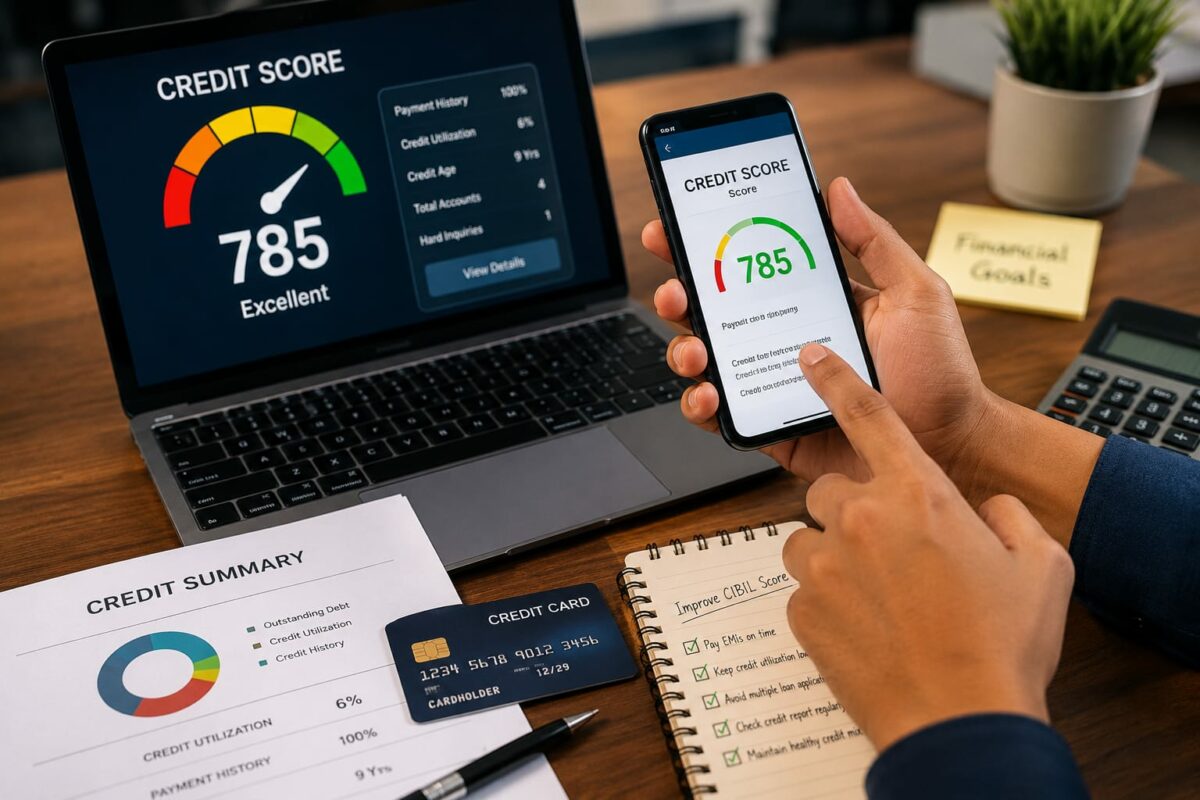
    How to Improve CIBIL Score Fast: 10 Smart Fixes That Work

    Incorrect Credit Report Entries

    Wrong overdue amounts, duplicate accounts, and reporting errors can also reduce scores.

    How to Improve CIBIL Score Fast: 10 Expert Strategies

    1. Pay EMIs and Credit Card Bills on Time

    This remains the single most important factor in improving a credit score.

    Experts recommend:

    • Enabling auto-pay
    • Setting reminders
    • Paying full dues instead of minimum balance

    Consistent repayment behavior often shows positive impact within a few months.

    2. Keep Credit Utilization Below 30%

    Most lenders prefer borrowers who use only a small portion of their available credit.

    Ideal example:

    • Total limit: ₹1,00,000
    • Recommended monthly usage: Below ₹30,000

    Lower utilization signals better financial management.

    3. Avoid Multiple Loan Applications Together

    Applying to several loan apps after one rejection can make the situation worse.

    Instead:

    • Compare lenders carefully
    • Check pre-approved offers
    • Avoid unnecessary hard inquiries

    4. Do Not Close Old Credit Cards Unnecessarily

    Older accounts strengthen credit age and repayment history.

    If your older credit card has a clean repayment record, keeping it active may help maintain stability in your profile.

    5. Check Credit Reports Regularly for Errors

    Many borrowers never review their reports until a loan rejection happens.

    Users should check for:

    • Incorrect overdue records
    • Unknown loans
    • Duplicate accounts
    • Wrong personal details

    Official source:

    • CIBIL Official Website https://www.cibil.com

    6. Use a Secured Credit Card If Needed

    Secured credit cards are useful for:

    • New borrowers
    • Low-score users
    • People rebuilding damaged credit history

    These cards are generally issued against fixed deposits.

    7. Convert “Settled” Status to “Closed”

    A settled account may continue affecting your profile.

    Experts suggest:

    • Contacting the lender
    • Clearing remaining dues
    • Requesting updated account status
    • Collecting an NOC

    This improves long-term credibility.

    8. Avoid Excessive BNPL Usage

    Buy Now Pay Later services have become common in India. However, overusing BNPL products can affect repayment behavior and credit health.

    Users should:

    • Avoid multiple BNPL accounts
    • Pay dues on time
    • Limit unnecessary spending

    9. Maintain a Healthy Credit Mix

    A balanced profile may include:

    • Credit cards
    • Consumer loans
    • Secured loans

    However, users should never take unnecessary loans purely for score improvement.

    10. Stay Away From Fake Credit Repair Scams

    Many online ads falsely promise:

    • Instant 900 score
    • Guaranteed loan approval
    • Fast score recovery hacks

    Such claims are misleading and sometimes fraudulent.

    India’s credit ecosystem follows regulated reporting systems that require time and consistent financial behavior.

    Why Some People See “No Score” Instead of a Low Score

    One major area most articles ignore is the difference between:

    • No credit history
    • Thin credit file
    • Poor credit score

    Many first-time salaried employees in India discover they have “No Score” despite earning stable income.

    This usually happens because:

    • They never used credit cards
    • They never took loans
    • Debit card transactions do not build credit history
    • Some fintech products may not report repayment data

    Best Ways to Build Credit From Scratch

    Users with no score can start with:

    • Secured credit cards
    • Small consumer durable loans
    • Responsible credit card usage
    • Timely EMI payments

    This section is important because many borrowers incorrectly assume “No Score” means “Bad Score.”

    When Paying Off a Loan Can Temporarily Reduce Your Score

    This is one of the most misunderstood realities in credit scoring.

    Many borrowers expect their score to immediately increase after loan repayment. However, in some situations, the score may temporarily decline.

    Why This Happens

    Possible reasons include:

    • Reduced average credit age
    • Lower active credit mix
    • Closed long-standing accounts
    • Reduced credit activity

    Myth vs Reality

    MythReality
    Paying off all loans instantly improves scoreScores may temporarily fluctuate
    Zero credit activity is safestCompletely inactive profiles may weaken scoring behavior

    This temporary drop is often normal and may stabilize later.

    Hidden Reasons Your CIBIL Score Is Not Improving

    Many users follow standard advice but still see no major improvement.

    Common Hidden Causes

    ProblemHidden ReasonSuggested Action
    Score not updatingLender reporting delayWait for next reporting cycle
    Improvement stuckSettlement historyContinue positive repayment behavior
    Sudden score dropCo-signed loan defaultReview linked accounts
    No score movementInactive accountsUse credit responsibly

    Important Insight

    Credit improvement depends not only on user behavior but also on lender reporting systems and bureau update cycles.

    Myth vs Reality: Dangerous CIBIL Misconceptions

    Misinformation around credit scores has increased significantly through social media and unverified finance channels.

    MythReality
    Checking your own score lowers itSelf-checks do not reduce scores
    Salary guarantees loan approvalCredit behavior matters more
    Paying minimum due is enoughInterest and utilization still increase
    Loan settlement equals closureSettlement may still affect approvals
    BNPL does not affect creditSome BNPL services may impact reports

    This section helps users avoid harmful financial assumptions.

    Advanced Credit Optimization Before Applying for a Home Loan

    Experienced financial advisors often recommend preparing your profile at least 6 months before applying for a major loan.

    Expert-Level Home Loan Preparation Strategy

    1. Reduce Utilization Early

    Bring usage below 20% at least 2–3 months before applying.

    2. Avoid New Unsecured Loans

    New personal loans before a mortgage application can reduce approval strength.

    3. Limit Hard Inquiries

    Too many recent inquiries may create risk signals for lenders.

    4. Maintain Stable Bank Balance

    Banks also review account stability, not just the CIBIL score.

    5. Improve Debt-to-Income Ratio

    Even users with strong scores may face rejection if existing EMIs are too high.

    This is one of the most overlooked realities in the Indian lending market.

    Can You Improve Your CIBIL Score in 30 Days?

    This remains one of the most searched finance questions in India.

    The reality is:

    • Small improvements are possible
    • Major recovery takes time
    • Consistency matters most

    If the issue is high utilization or recent overdue payments, some improvement may appear within 30–60 days.

    Serious defaults or settlements usually require longer recovery periods.

    How Long Does CIBIL Score Improvement Take?

    Credit IssueEstimated Recovery Time
    High utilization1–3 months
    Late EMI history3–6 months
    Settlement impact6–12 months
    Major default recovery12+ months

    Actual recovery timelines depend on lender reporting cycles and repayment consistency.

    Important Things to Check Before Applying for a Loan

    Before applying:

    • Review your latest credit report
    • Calculate EMI affordability
    • Avoid fake loan apps
    • Compare lenders carefully
    • Keep financial documents ready

    Blindly applying after rejection can further damage your profile.

    What RBI Guidelines Say About Credit Reporting

    Reserve Bank of India regularly issues guidelines related to fair lending and borrower protection.

    Official source:

    Borrowers are also encouraged to periodically review their credit reports through authorized channels.

    Most Searched Related Queries in India

    Trending search queries include:

    • How to improve CIBIL score fast after settlement
    • Low CIBIL score loan options
    • Best credit card for low CIBIL
    • Can CIBIL improve in one month
    • EMI missed what to do
    • How to remove settled status from CIBIL

    Covering these topics naturally improves topical authority and semantic SEO strength.

    Internal Linking Suggestions

    To strengthen topical authority, related internal articles may include:

    • Best Personal Loans for Low CIBIL Score
    • How EMI Defaults Affect Loan Approval
    • RBI Rules for Digital Lending Apps
    • Best Secured Credit Cards in India
    • Personal Loan Rejection Reasons Explained

    FAQ Section

    What is considered a good CIBIL score in India?

    A score above 750 is generally considered good by most banks.

    Does checking my own CIBIL score reduce it?

    No. Self-checking is treated as a soft inquiry.

    Can late EMI payments damage my score?

    Yes. Repeated late payments can reduce creditworthiness significantly.

    Is loan settlement harmful for future approvals?

    Yes. Some lenders may treat settled accounts as higher risk.

    How often should I check my credit report?

    Experts recommend checking it every few months.

    Can secured credit cards improve credit history?

    Yes. Responsible usage can gradually strengthen your profile.

    Conclusion

    Improving your CIBIL score fast is possible, but it requires disciplined financial habits, patience, and realistic expectations. Timely EMI payments, lower credit utilization, careful borrowing behavior, and accurate credit reports all play critical roles in strengthening your profile.

    At the same time, borrowers must understand that credit scoring is more complex than most viral finance advice suggests. Factors like lender reporting delays, settlement history, hard inquiries, inactive accounts, and credit mix can all influence outcomes in ways many users do not expect.

    Instead of chasing instant fixes, users should focus on building long-term financial credibility. A healthy CIBIL score not only improves loan approval chances but also opens access to better interest rates, stronger financial products, and more stable borrowing opportunities in the future.

    Credit Score & Financial Disclaimer

    This article is published for educational and informational purposes only on Indian-Fasttrack.com . The information shared in this article is based on publicly available financial guidelines, credit behavior analysis, lending practices, and personal finance education.

    CIBIL score improvement depends on multiple factors including repayment history, credit utilization, lender reporting cycles, active credit accounts, and overall financial behavior. No institution can legally guarantee instant credit score improvement or guaranteed loan approval.

    Readers should avoid fake credit repair services, misleading financial promises, and unauthorized loan recovery agents claiming instant CIBIL score recovery.

    Before making financial or borrowing decisions, readers are advised to verify information through official sources such as TransUnion CIBIL , Reserve Bank of India (RBI) , Experian India , and CRIF High Mark .

    For more personal finance, banking, loan, and credit score guides, visit: Indian-Fasttrack.com

  • Best SIP Plans for Beginners in India 2026 – Smart SIP Strategy for Long-Term Wealth Creation

    Best SIP Plans for Beginners in India 2026 – Smart SIP Strategy for Long-Term Wealth Creation

    Looking for the best SIP plans for beginners in India? Learn how to start SIP, safe investment strategies, hidden SIP mistakes, expert portfolio tips, and smart mutual fund planning for long-term wealth creation in 2026.

    In recent years, SIP investments have become one of the most popular ways Indians start investing. From salaried employees and freelancers to students and small business owners, millions of people are now searching for the best SIP plans for beginners to build long-term financial security.

    The biggest reason behind SIP popularity is simple — you do not need huge money to start investing. Even ₹500 monthly investments can help create long-term wealth if done consistently and intelligently.

    But here is the reality most websites never explain:

    👉 SIP success does not depend only on choosing a “top mutual fund.”
    👉 Real success depends on strategy, consistency, investor psychology, market timing discipline, and avoiding hidden mistakes.

    This detailed mutual fund SIP guide explains:

    • How SIP works
    • Best SIP categories for beginners
    • Hidden mistakes most investors make
    • Myths vs reality
    • Advanced SIP strategies
    • Real-world investing insights
    • Safe SIP investment approaches
    • Step-by-step guide on how to start SIP

    If you are planning to begin investing in 2026, this guide can help you avoid beginner mistakes and build a smarter investment foundation.

    What Is SIP in Mutual Funds?

    SIP stands for Systematic Investment Plan. It is a method where investors invest fixed amounts regularly into mutual funds.

    Instead of investing a large amount at once, SIP allows monthly investing like:

    • ₹500
    • ₹1000
    • ₹2000
    • ₹5000

    This makes SIP one of the easiest SIP investment plans for beginners in India.

    Why SIP Is Becoming So Popular in India

    The popularity of best SIP plans in India has increased rapidly because SIP investing offers:

    • Low entry barrier
    • Disciplined investing
    • Flexibility
    • Long-term compounding benefits
    • Better financial habits

    Unlike stock trading, SIP investing reduces emotional decision-making and allows investors to stay consistent during market ups and downs.

    For beginners searching for a relatively safe SIP investment, diversified mutual fund categories are usually considered better than random stock selection.

    How SIP Works in India

    Understanding how to start SIP properly is important before investing.

    Basic SIP Process:

    1. Choose a mutual fund
    2. Select monthly SIP amount
    3. Choose SIP date
    4. Amount auto-debits from bank account
    5. Mutual fund units are purchased

    When markets fall:

    • Investors get more units

    When markets rise:

    • Investors get fewer units

    This process is called Rupee Cost Averaging, which helps reduce timing risk over long periods.

    Best SIP Plans for Beginners – Which Categories Are Better?

    best sip plans for beginners india

    Most beginners make one major mistake:
    ❌ They search for “highest return mutual fund.”

    Experienced investors focus more on:
    ✅ Risk management
    ✅ Consistency
    ✅ Diversification
    ✅ Long-term sustainability

    Here are some commonly preferred SIP investment plans for beginners.

    1. Index Fund SIPs

    Index funds track indices like:

    • Nifty 50
    • Sensex

    Why Beginners Prefer Them

    • Lower expense ratio
    • Simple investing approach
    • Diversified exposure
    • Lower management bias

    Many experts consider index funds a practical starting point for beginners searching for best SIP plans in India.

    2. Large Cap Mutual Fund SIPs

    Large cap funds invest in established companies.

    Benefits

    • Relatively lower volatility
    • Better stability
    • Suitable for cautious investors

    These are often included in many safe SIP investment strategies.

    3. Flexi Cap SIP Funds

    Flexi cap funds invest across:

    • Large cap
    • Mid cap
    • Small cap companies

    Advantages

    • Better diversification
    • Flexible allocation
    • Balanced growth opportunities

    These funds are popular among investors looking for diversified best SIP plans for beginners.

    4. Hybrid Mutual Fund SIPs

    Hybrid funds combine:

    • Equity
    • Debt instruments

    Why Beginners Like Them

    • Lower volatility
    • More balanced investing
    • Better psychological comfort during market crashes

    Is SIP Completely Safe?

    This is where most articles give incomplete information.

    Reality:

    • SIP reduces timing risk
    • SIP does NOT remove market risk

    Mutual fund investments are market-linked.

    Short-term losses are possible.

    However, SIP investing offers:

    • Diversification
    • Disciplined investing
    • Lower emotional investing
    • Long-term compounding potential

    For beginners, diversified funds usually reduce unnecessary risk exposure.

    Why Many Beginners Quit SIP at the Worst Possible Time

    This is one of the biggest hidden realities of SIP investing.

    During market crashes:

    • News channels create panic
    • Social media spreads fear
    • Beginners think SIP “failed”

    As a result:
    ❌ Many investors stop SIP during market corrections

    Ironically, this is often the period when SIP investors accumulate more units at lower prices.

    Real-World Example Most Beginners Never Understand

    InvestorMarket Crash ReactionLong-Term Outcome
    Investor AStopped SIPLower wealth creation
    Investor BContinued SIPBetter long-term accumulation

    This is why experienced investors focus more on discipline than market prediction.

    SIP Advice That Sounds Smart But Can Backfire

    Most finance websites repeat generic advice without discussing exceptions.

    Myth: “Increase SIP Every Year”

    Reality:
    This works only if:

    • income is stable
    • expenses are manageable
    • emergency fund exists

    For freelancers or business owners with irregular income, aggressive SIP increases may create financial stress.

    Myth: “Small Cap SIP Gives Highest Returns”

    Reality:
    High volatility often causes beginners to panic and exit early.

    Psychological comfort matters more than theoretical returns.

    Myth: “More SIPs Means Better Diversification”

    Reality:
    Many investors unknowingly buy multiple funds holding similar stocks.

    Too many SIPs can create:

    • overlap
    • confusion
    • poor tracking

    Hidden SIP Costs Most Investors Ignore

    This is a highly overlooked topic.

    1. Expense Ratio Impact

    Even a small 1% higher expense ratio can significantly affect wealth over 15–20 years.

    2. Direct vs Regular Funds

    Regular funds often include distributor commissions.

    Direct plans may offer:

    • lower expense ratio
    • potentially better long-term returns

    3. Inflation Reality

    A 12% return does NOT mean actual wealth growth is 12%.

    After:

    • inflation
    • taxes
    • expenses

    real purchasing power may be much lower.

    Minimum Amount Required to Start SIP in India

    One major reason behind the popularity of SIP investment plans for beginners is affordability.

    Many funds allow SIP starting from:

    • ₹100
    • ₹500
    • ₹1000

    This makes SIP suitable for:

    • students
    • salaried employees
    • young professionals
    • small business owners

    Benefits of SIP Investment for Beginners

    1. Disciplined Investing

    Creates consistent saving habits.

    2. Power of Compounding

    Long-term investing helps money grow over time.

    3. Lower Emotional Investing

    Reduces panic buying and selling.

    4. Flexible Investment

    You can:

    • increase SIP
    • pause SIP
    • stop SIP
    • switch funds

    Common SIP Mistakes Beginners Should Avoid

    1. Expecting Guaranteed Returns

    No mutual fund guarantees fixed returns.

    2. Stopping SIP During Market Crash

    This is one of the biggest wealth-destroying mistakes.

    3. Choosing Funds Based Only on Past Returns

    Past performance does not guarantee future performance.

    4. Investing Without Goals

    Every SIP should connect with financial goals like:

    • retirement
    • emergency fund
    • wealth creation
    • child education

    Advanced SIP Strategy Used by Experienced Investors

    Most beginners invest randomly.

    Experienced investors usually structure SIPs goal-wise.

    Example of Smart SIP Layering

    GoalInvestment Type
    RetirementEquity-heavy SIP
    Emergency BackupHybrid/Debt Allocation
    Child EducationBalanced SIP
    Long-Term WealthIndex + Flexi Cap

    This creates better portfolio clarity and risk management.

    Why Experienced Investors Keep Cash Alongside SIPs

    This is rarely discussed.

    Experienced investors maintain:

    • emergency savings
    • liquidity reserve
    • short-term cash buffer

    This prevents forced SIP stoppage during financial emergencies.

    How to Start SIP in India – Step-by-Step Guide

    If you are wondering how to start SIP, follow these steps.

    Step 1: Define Financial Goal

    Examples:

    Step 2: Decide Monthly Investment Amount

    Choose an amount you can invest consistently.

    Examples:

    • ₹500
    • ₹1000
    • ₹3000

    Consistency matters more than investing huge money initially.

    Step 3: Choose Mutual Fund Category

    Select according to:

    • risk tolerance
    • investment duration
    • financial goals

    Step 4: Complete KYC

    Documents required:

    • PAN card
    • Aadhaar card
    • bank account
    • mobile number

    Step 5: Start SIP Through Trusted Platforms

    Investors can invest through:

    • mutual fund websites
    • banks
    • investment platforms
    • SEBI-registered intermediaries

    SIP vs Fixed Deposit – Which Is Better?

    FeatureSIPFixed Deposit
    ReturnsMarket-linkedFixed
    RiskModerateLow
    Inflation ProtectionBetter potentialLimited
    Long-Term GrowthHigher potentialLower
    FlexibilityHighModerate

    Fixed deposits offer stability, while SIPs may provide better long-term growth potential.

    Myth vs Reality – What Most SIP Articles Don’t Tell You

    MythReality
    SIP always gives high returnsReturns depend on market cycles
    SIP removes all riskSIP reduces timing risk, not market risk
    More risky funds always winMany investors cannot handle volatility
    Top-rated funds stay top foreverFund performance changes over time
    SIP alone creates wealthIncome growth + discipline matter equally

    Final Thoughts

    Choosing the best SIP plans for beginners is not about finding “secret mutual funds.”

    Real long-term wealth creation depends on:

    • consistency
    • discipline
    • diversification
    • emotional control
    • goal-based investing

    This detailed mutual fund SIP guide shows that successful investing is often more about behavior than predictions.

    If you are planning to begin investing in India, understanding *how to start SIP, avoiding common mistakes, and choosing suitable *SIP investment plans for beginners can help create a stronger financial future over time.

    Frequently Asked Questions (FAQs)

    Which SIP is best for beginners in India?

    Index funds, large cap funds, flexi cap funds, and hybrid funds are commonly considered beginner-friendly.

    Can I start SIP with ₹500?

    Yes, many mutual funds allow SIP investments starting from ₹500.

    Is SIP risk-free?

    No. Mutual fund investments are market-linked and returns are not guaranteed.

    How long should beginners continue SIP?

    Long-term investing of 5–15 years is generally preferred.

    Is SIP better than bank savings?

    SIP may offer better long-term growth potential but involves market risk.

    Investment Disclaimer

    This article is published for educational and informational purposes only on Indian-Fasttrack.com . Mutual fund investments are subject to market risks. Investors should carefully read all scheme-related documents before investing.

    The information shared in this article is based on publicly available financial concepts, market behavior observations, and beginner investment education. This content should not be considered personalized financial advice or guaranteed investment guidance.

    Before making investment decisions, readers are advised to consult a SEBI-registered financial advisor or visit official regulatory sources like SEBI Official Website and AMFI India .

    For more finance, investment, and personal finance guides, visit: Indian-Fasttrack.com

  • Mumbai Plumber Income: ₹18 लाख सालाना कमाई, Creta और खेत खरीदकर सबको किया हैरान

    Mumbai Plumber Income: ₹18 लाख सालाना कमाई, Creta और खेत खरीदकर सबको किया हैरान

    Mumbai Viral News: Mira Road, Borivali और Kandivali में काम करने वाले एक प्लंबर की ₹18 LPA कमाई वायरल। Hyundai Creta, घर और farmland खरीदकर नेटिज़न्स को चौंकाया, Blue-Collar Jobs की बढ़ती वैल्यू पर चर्चा।

    मुंबई: देश की मायानगरी से एक ऐसी खबर सामने आई है जिसने सोशल मीडिया पर लोगों को सोचने पर मजबूर कर दिया है। Mumbai के एक plumber की ₹18 लाख सालाना कमाई और उसका लाइफस्टाइल अब वायरल हो चुका है।

    बताया जा रहा है कि यह प्लंबर Mira Road, Borivali और Kandivali जैसे इलाकों में contracts लेकर काम करता है, और इसी से उसकी कमाई लाखों में पहुंच गई है।

    Reddit पोस्ट से हुआ खुलासा

    यह मामला तब सामने आया जब एक society resident ने Reddit पर “A Plumber in Mumbai is earning Rs 18 LPA” नाम से पोस्ट शेयर की।

    पोस्ट के मुताबिक, जब प्लंबर घर में पाइप ठीक कर रहा था, तब बातचीत के दौरान उसने अपनी annual income करीब ₹18 लाख बताई

    पोस्ट करने वाले ने लिखा, “पहले मुझे लगा वो मजाक कर रहा है, लेकिन जब उसने आंकड़े बताने शुरू किए तो मैं खुद अपनी life choices पर सोचने लगा।”

    Mira Road से Kandivali तक contracts से कमाई

    जानकारी के अनुसार यह प्लंबर Mira Road, Borivali और Kandivali के कई townships में contracts लेकर काम करता है

    Multiple contracts और लगातार काम मिलने की वजह से उसकी monthly और yearly income काफी stable और high हो गई है

    Hyundai Creta, घर और farmland का मालिक

    इस प्लंबर की कमाई सिर्फ income तक सीमित नहीं है, बल्कि उसने अपनी कमाई को सही जगह invest भी किया है।

    रिपोर्ट के अनुसार उसके पास:

    • 2023 model Hyundai Creta SUV
    • अपने गांव में बना हुआ पक्का घर
    • खरीदी हुई farmland (खेती की जमीन)

    यह lifestyle देखकर लोग हैरान हैं कि एक skilled trade से इतना कुछ हासिल किया जा सकता है।

    Blue-Collar Jobs की बढ़ती डिमांड

    इस खबर के वायरल होने के बाद सोशल मीडिया पर Blue-Collar Jobs vs White-Collar Jobs पर बड़ी चर्चा शुरू हो गई है।

    कई यूज़र्स का कहना है कि plumber, electrician, carpenter, mechanic जैसे skilled काम कभी खत्म नहीं होंगे, क्योंकि ये jobs AI और automation से कम प्रभावित होती हैं

    “Skill हो तो कमाई unlimited है” – सोशल मीडिया रिएक्शन

    एक यूज़र ने लिखा:
    “Blue-collar jobs हमेशा demand में रहेंगी। अगर skill और experience अच्छा है तो कमाई बहुत ज्यादा हो सकती है।”

    दूसरे यूज़र ने कहा कि AC installation जैसे seasonal काम और farming को combine करके लोग सालभर steady income बना सकते हैं

    एक घंटे का ₹500 से ज्यादा चार्ज

    कुछ लोगों ने यह भी बताया कि मुंबई में plumbers एक घंटे का कम से कम ₹500 या उससे ज्यादा चार्ज करते हैं, और काम के हिसाब से extra पैसे भी लेते हैं।

    यही वजह है कि अगर काम लगातार मिलता रहे तो monthly income आसानी से high level तक पहुंच सकती है

    Skill Development और Financial Planning का सबक

    Experts का मानना है कि यह उदाहरण दिखाता है कि सिर्फ degree ही नहीं, बल्कि practical skills और सही financial planning भी success दिला सकती है

    इस प्लंबर ने:

    • Multiple income sources बनाए
    • Contracts लेकर काम बढ़ाया
    • कमाई को assets (car, house, land) में invest किया

    यही उसकी success की सबसे बड़ी वजह मानी जा रही है।

    सोशल मीडिया पर वायरल हुई कहानी

    यह कहानी अब viral news बन चुकी है और लोग अपने career choices को लेकर discussion कर रहे हैं।

    कई लोग इसे “eye-opener” बता रहे हैं कि traditional jobs के अलावा भी high income career options मौजूद हैं

    Job Related Useful Links (Skill-Based Careers)

    अगर आप भी ऐसे skill-based jobs में interest रखते हैं, तो इन प्लेटफॉर्म्स पर opportunities देख सकते हैं:


    FAQ

    Q1: मुंबई के प्लंबर की कितनी कमाई है?

    इस प्लंबर की annual income लगभग ₹18 लाख (18 LPA) बताई गई है।

    Q2: वह किन इलाकों में काम करता है?

    वह Mira Road, Borivali और Kandivali में contracts लेकर काम करता है।

    Q3: उसके पास कौन-कौन सी संपत्ति है?

    उसके पास Hyundai Creta, गांव में घर और farmland है।

    Q4: Blue-collar jobs क्यों चर्चा में हैं?

    क्योंकि ये jobs AI और automation से कम प्रभावित होती हैं और skilled लोगों को अच्छी income देती हैं।

    Q5: क्या plumbing जैसे काम में अच्छी कमाई हो सकती है?

    हाँ, अगर skill और experience अच्छा हो तो monthly और yearly income काफी high हो सकती है